
Connector Pins & Machined Pins
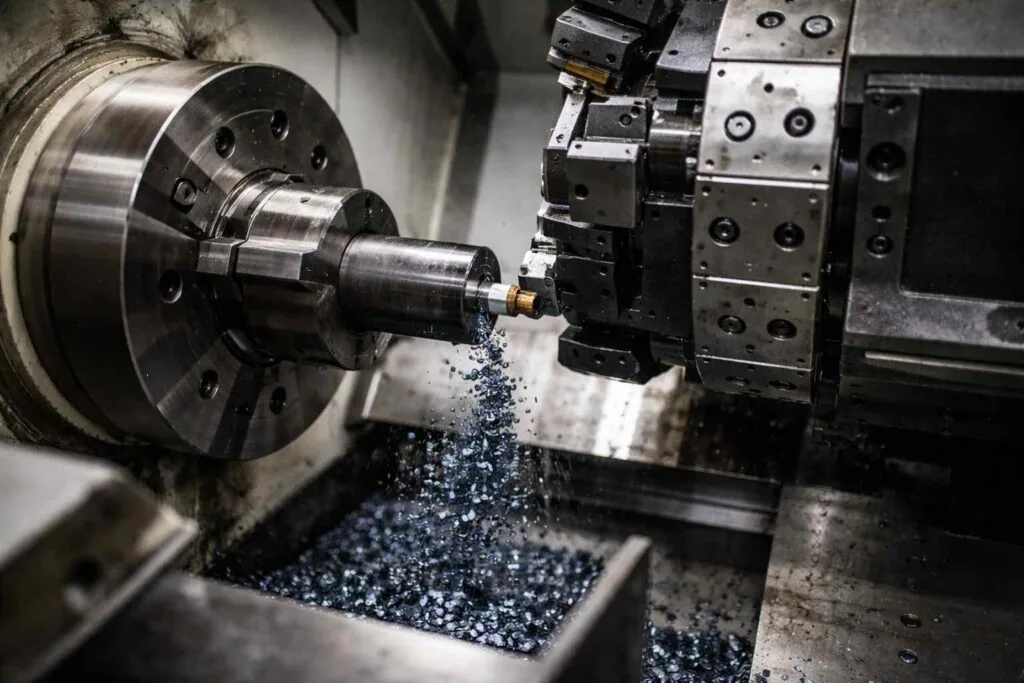
Signal, power, RF and pogo pins turned to your drawing in Shenzhen — one prototype to 100,000+.
- ISO 9001:2015 & IATF 16949 certified connector pin supplier
- CMM inspection and XRF plating verification on every production run
- Express shipping to 50+ countries
Talk to an engineer
26 real samples of connector pins & machined pins, six categories, one shop
Each card is a genuine connector pin or machined pin sample we've produced — not a placeholder. Filter by category, check the material and process, and use it as a starting point for your own drawing.
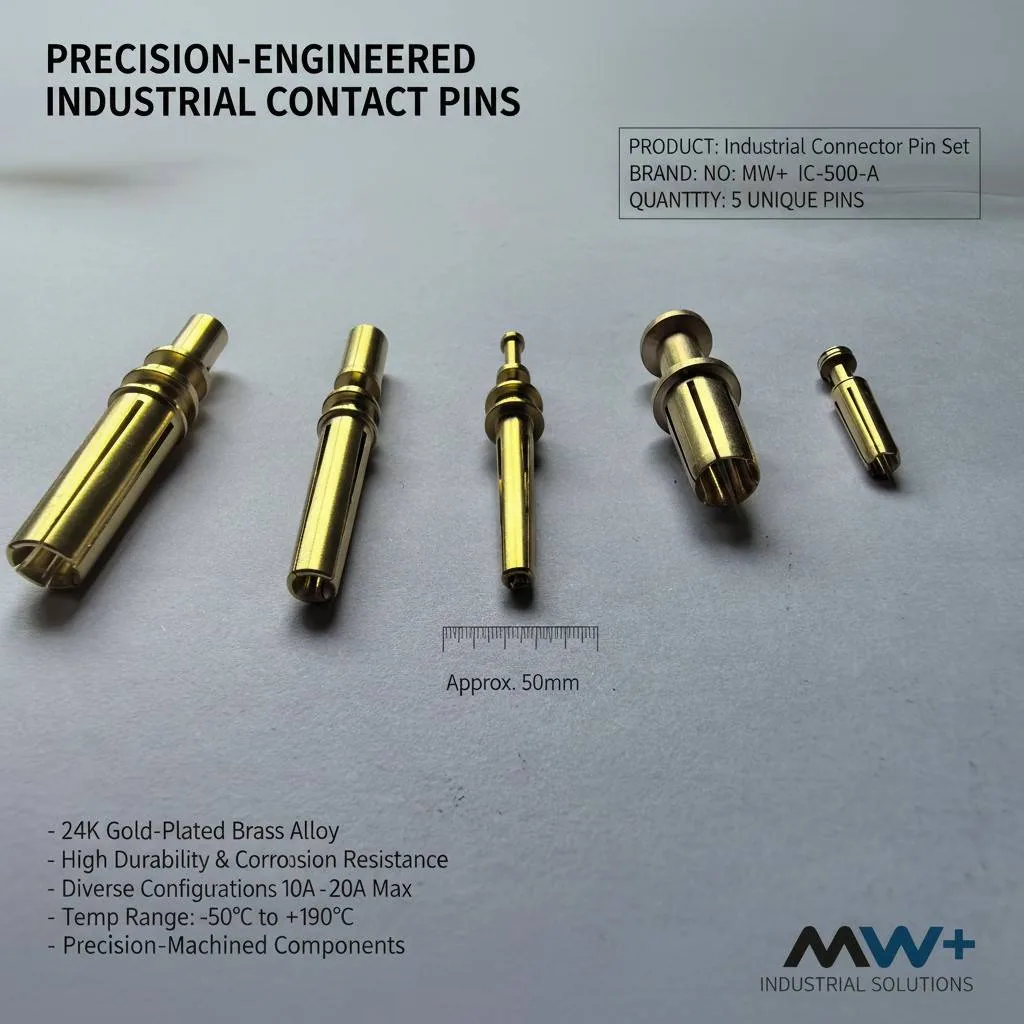
Gold-Plated Signal Pin
Signal pins turned from brass and phosphor bronze for USB, HDMI and board-to-board interfaces, gold-flashed over nickel for low insertion force across 10,000+ mating cycles.
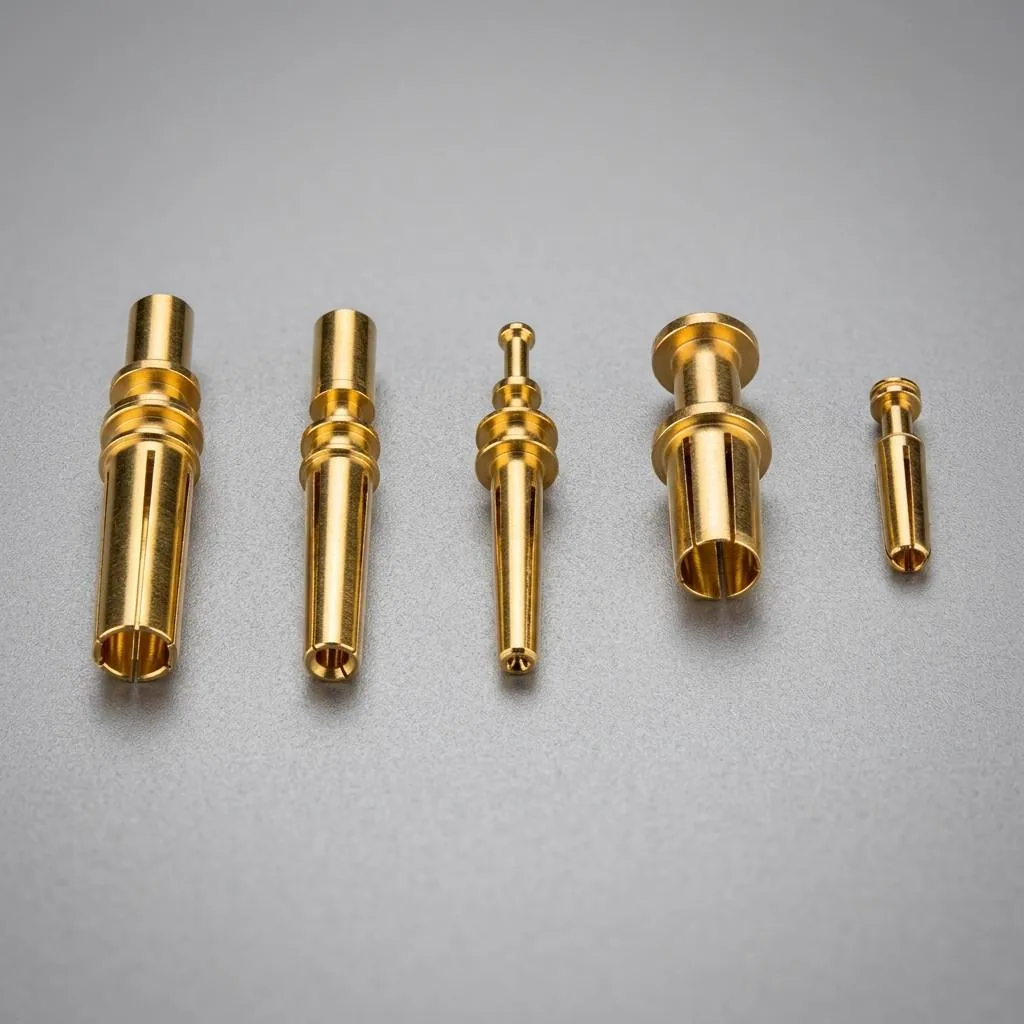
Right-Angle Connector Pin
Right-angle signal pins with integrated strain relief, gold-plated for board-edge and low-profile connector layouts.
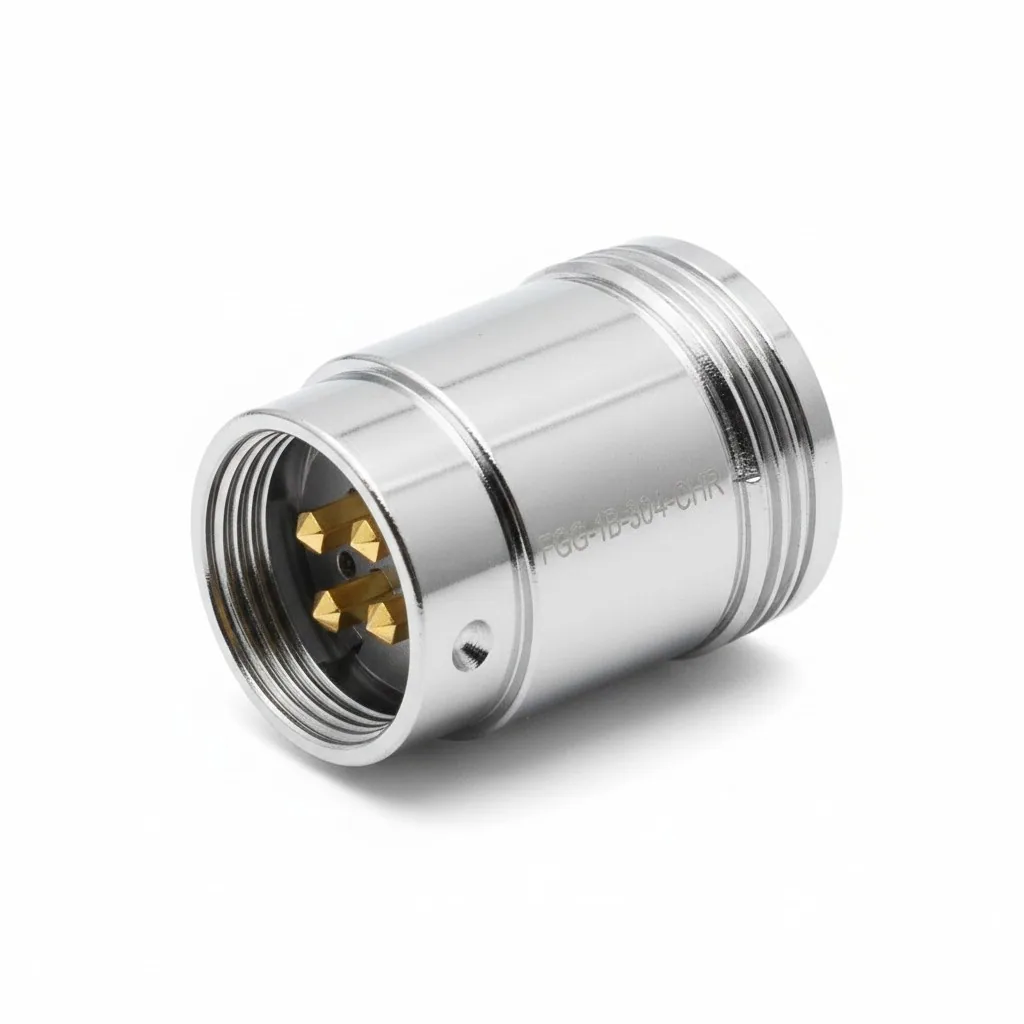
Dual-Ended Contact
Symmetrical dual-entry contacts turned from brass with gold-over-nickel plating, engineered for interchangeable connector designs.
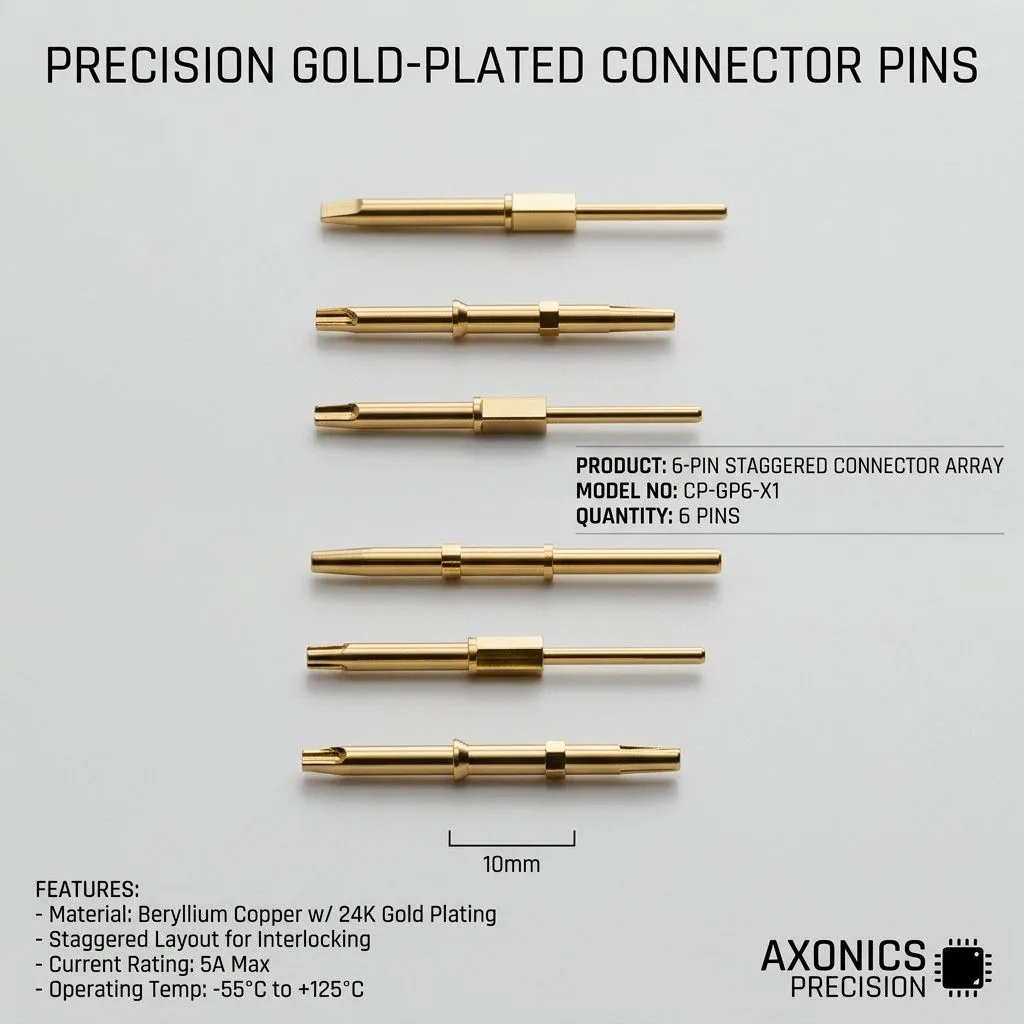
Edge Connector Pin
Beveled-tip edge connector pins gold-plated for card-edge interfaces, machined for smooth repeated insertion.
High-Speed Data Pin
Differential-pair data pins held to under 5 picoseconds of skew, gold-plated for high-speed signal integrity.
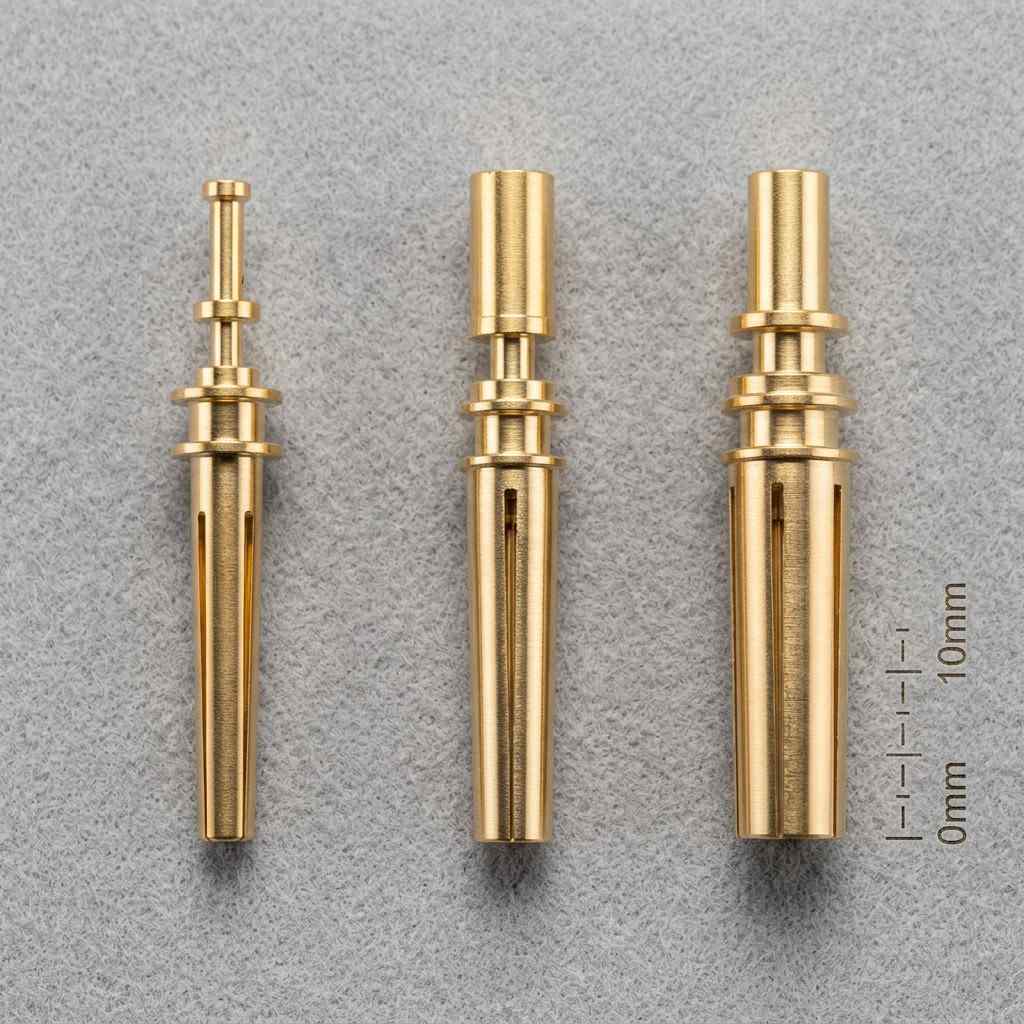
High-Current Contact Pin
Beryllium copper power contacts silver-plated for maximum conductivity, rated to 50A for EV battery and heavy power-connector applications.
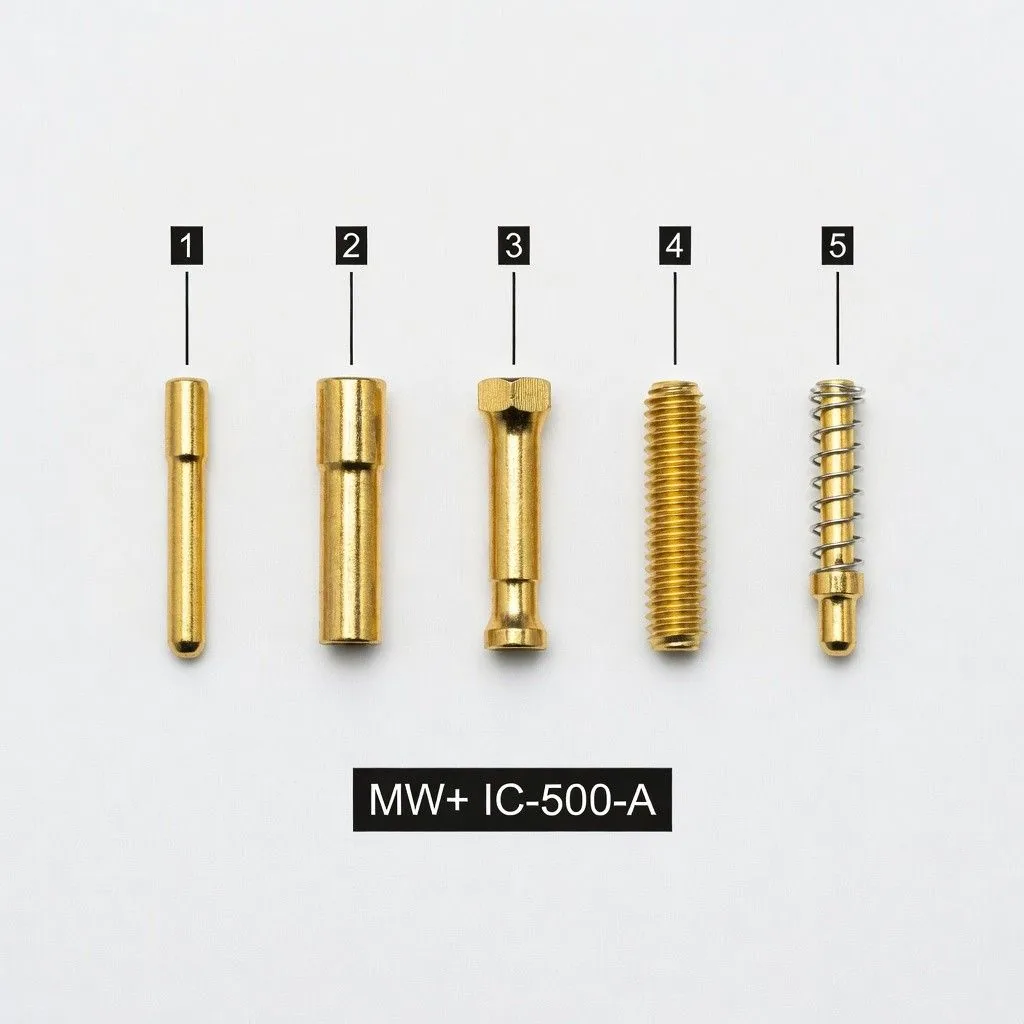
Beryllium Copper Pin
Fatigue-resistant beryllium copper contacts rated for 50,000+ mating cycles, used across high-reliability connector applications.
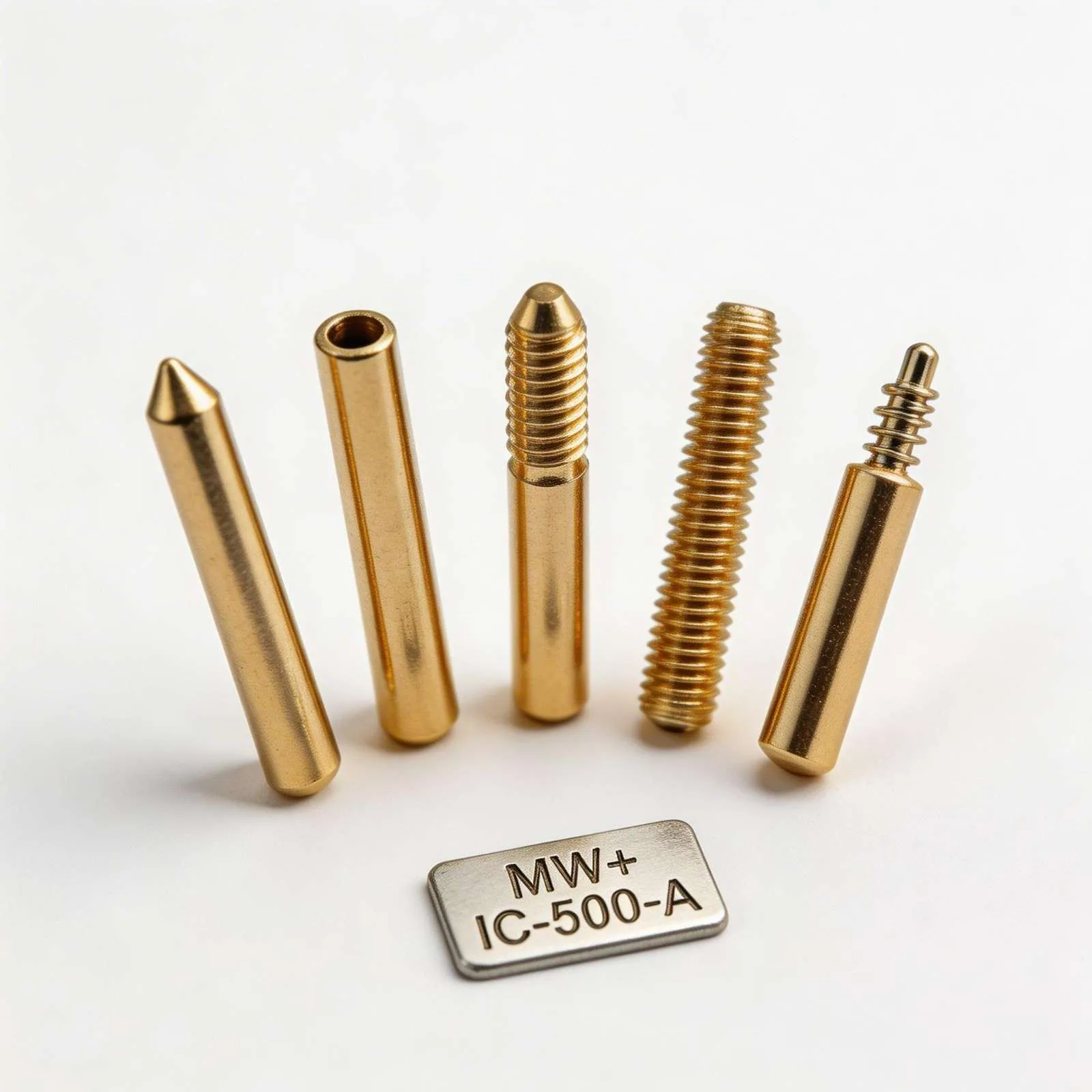
Low-Resistance Power Pin
Silver-plated copper busbar pins turned for sub-0.1-milliohm resistance, built for high-current power distribution.
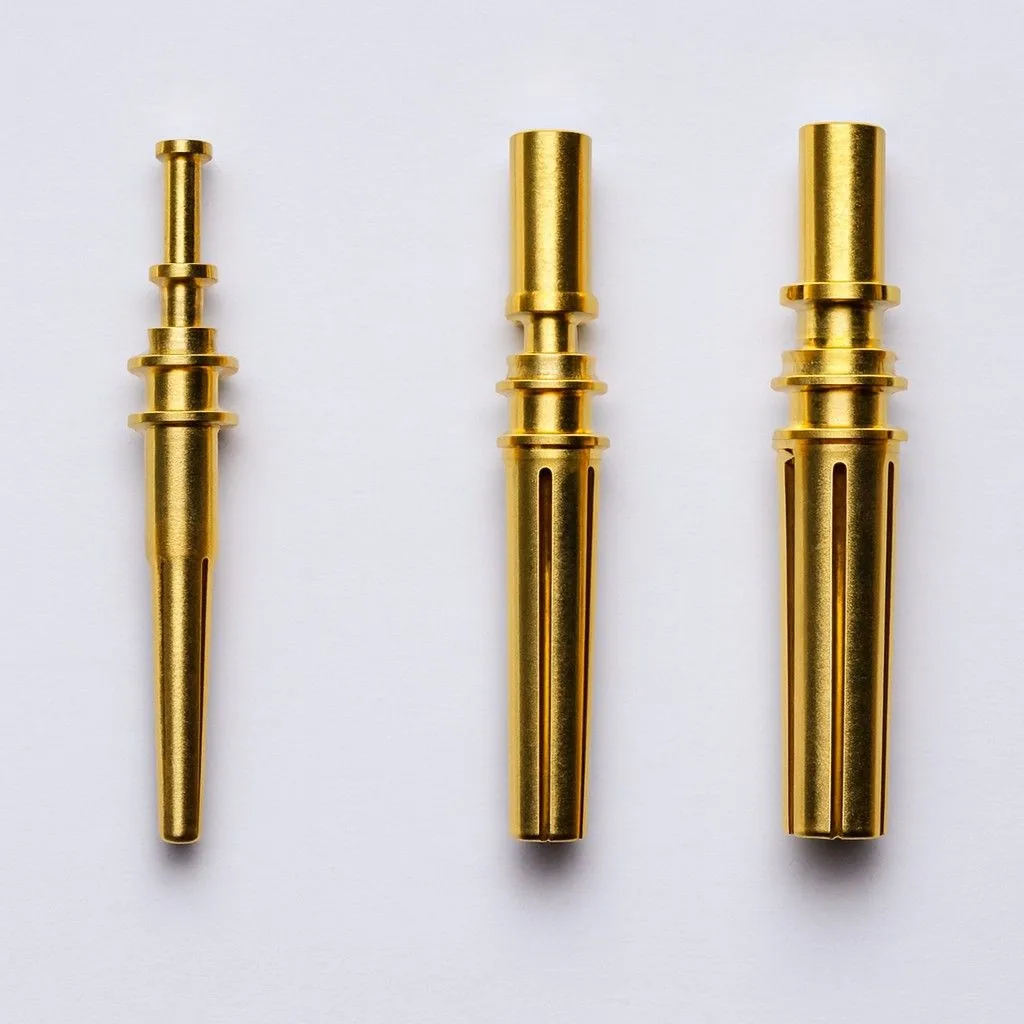
Precision Turned Connector
Passivated stainless connector pins for medical and industrial sensor housings, machined biocompatible and corrosion-proof for service to 300°C.
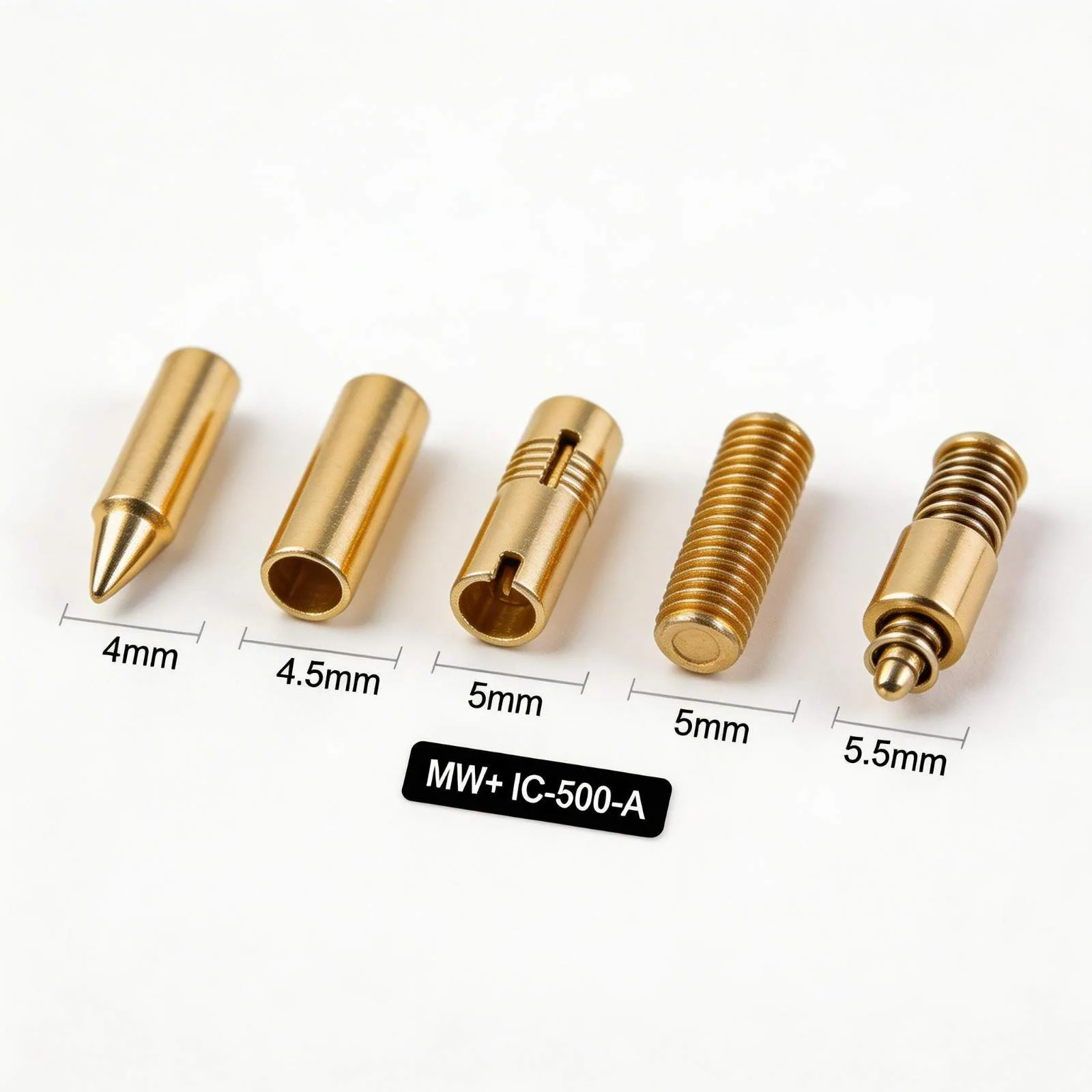
Spring-Loaded Contact
Spring-loaded contacts combining beryllium copper bodies with stainless springs, gold-over-nickel plated for reliable test-jig and charging contacts.
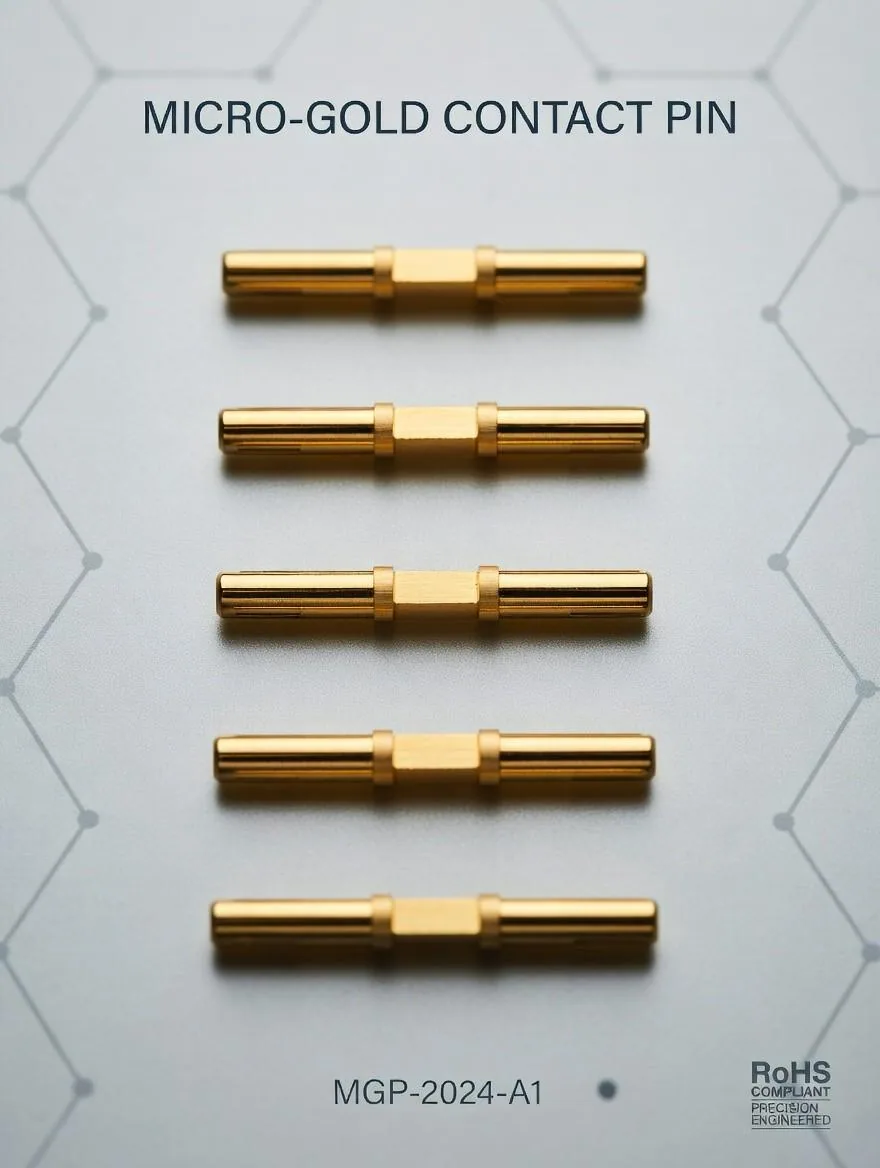
Test Probe Pin
Gold-plated test probe pins with a replaceable tip design, machined for ICT and FCT fixture longevity.
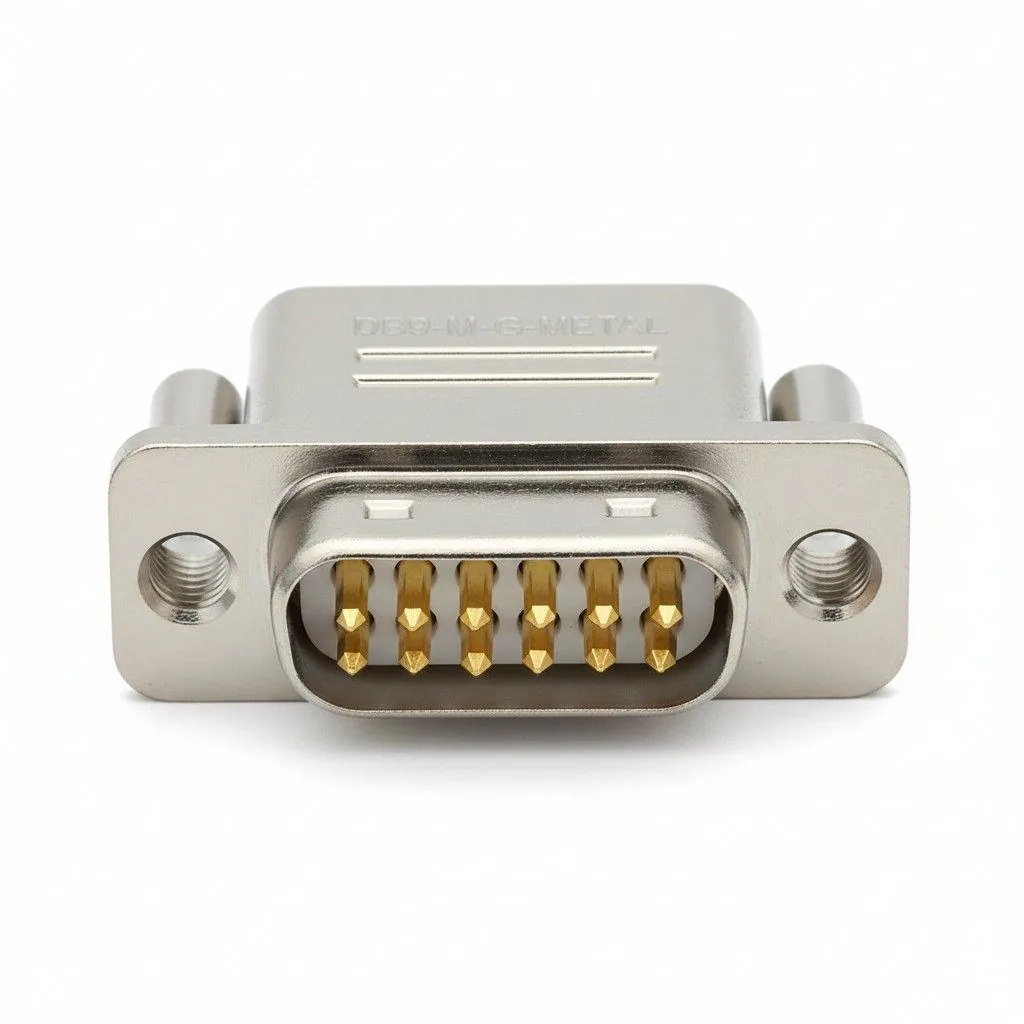
Pogo Pin Connector
Spring-loaded pogo pins rated to 100,000 cycles for magnetic charging and docking connectors, gold- or nickel-plated on request.
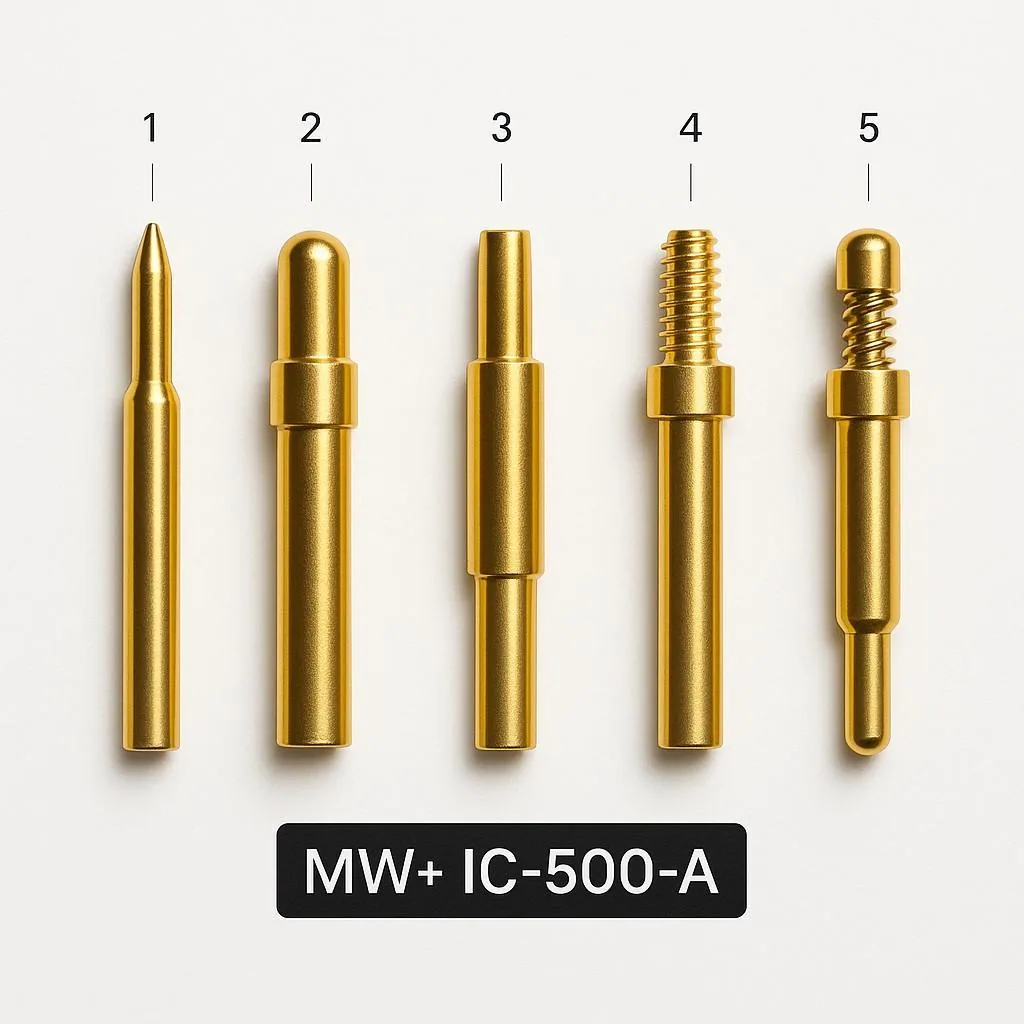
Precision Turned Contact
Smooth-finish precision contacts turned to sub-2-micron tolerance for high-speed data links requiring consistent impedance.
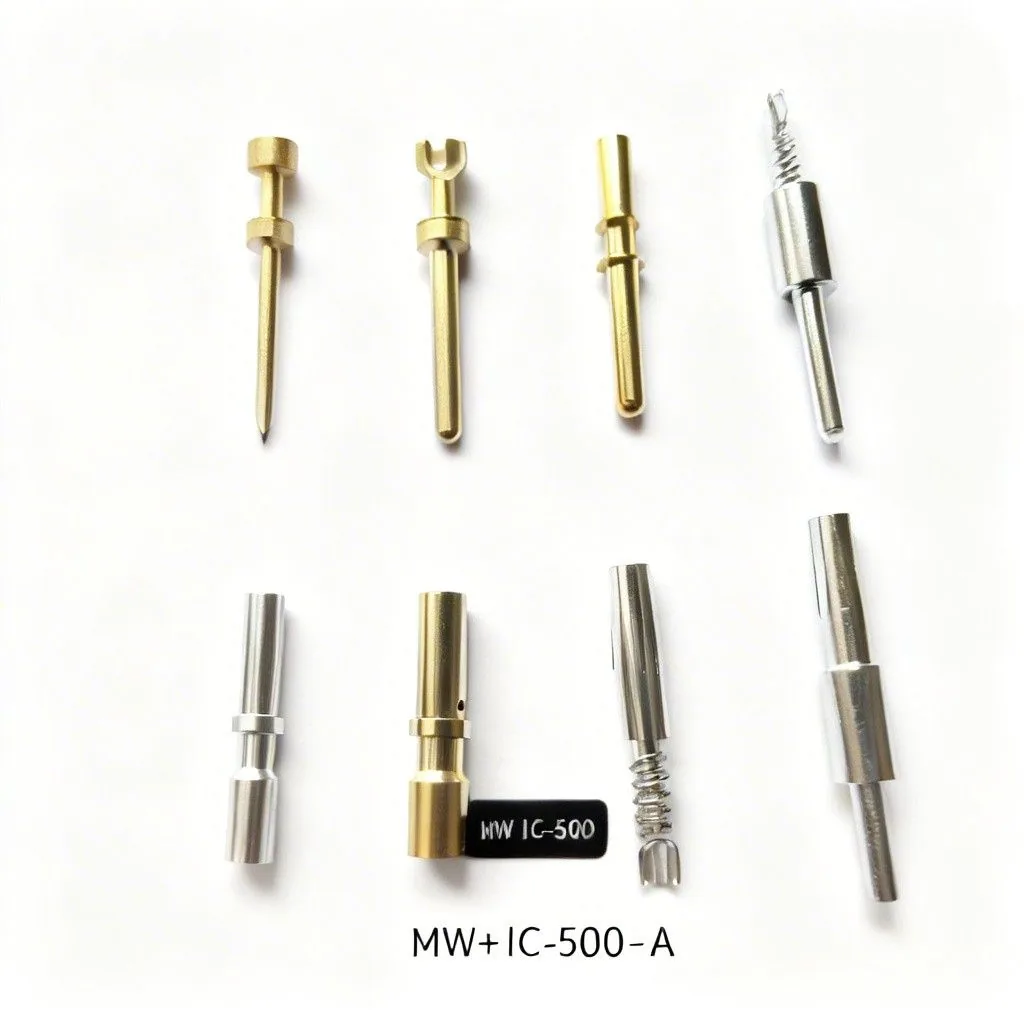
RF Coaxial Pin
Gold-plated RF pins turned to a 50-ohm impedance profile with low VSWR, machined for antenna and RF connector assemblies.
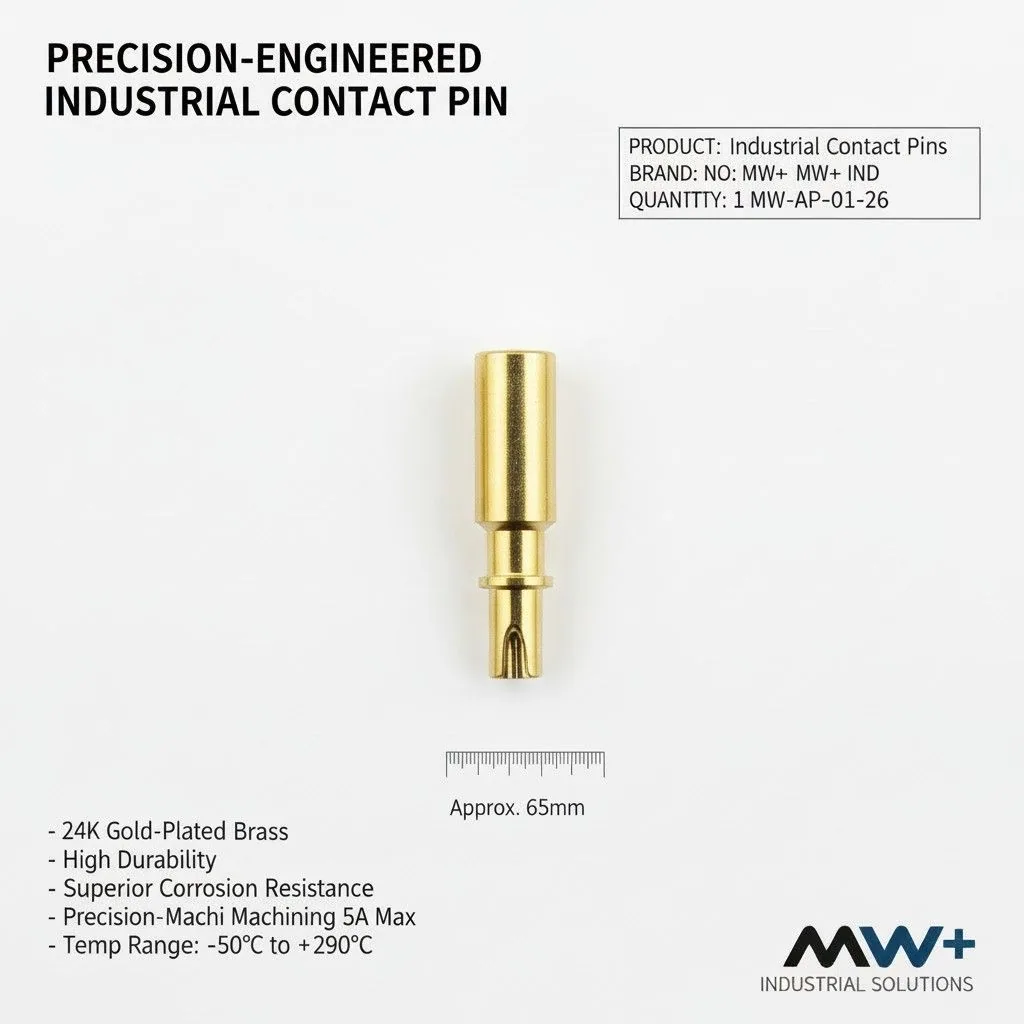
Micro Header Pin
Ultra-miniature header pins turned to sub-2-micron tolerance for wearables and micro connectors, gold-flashed for stable contact resistance.
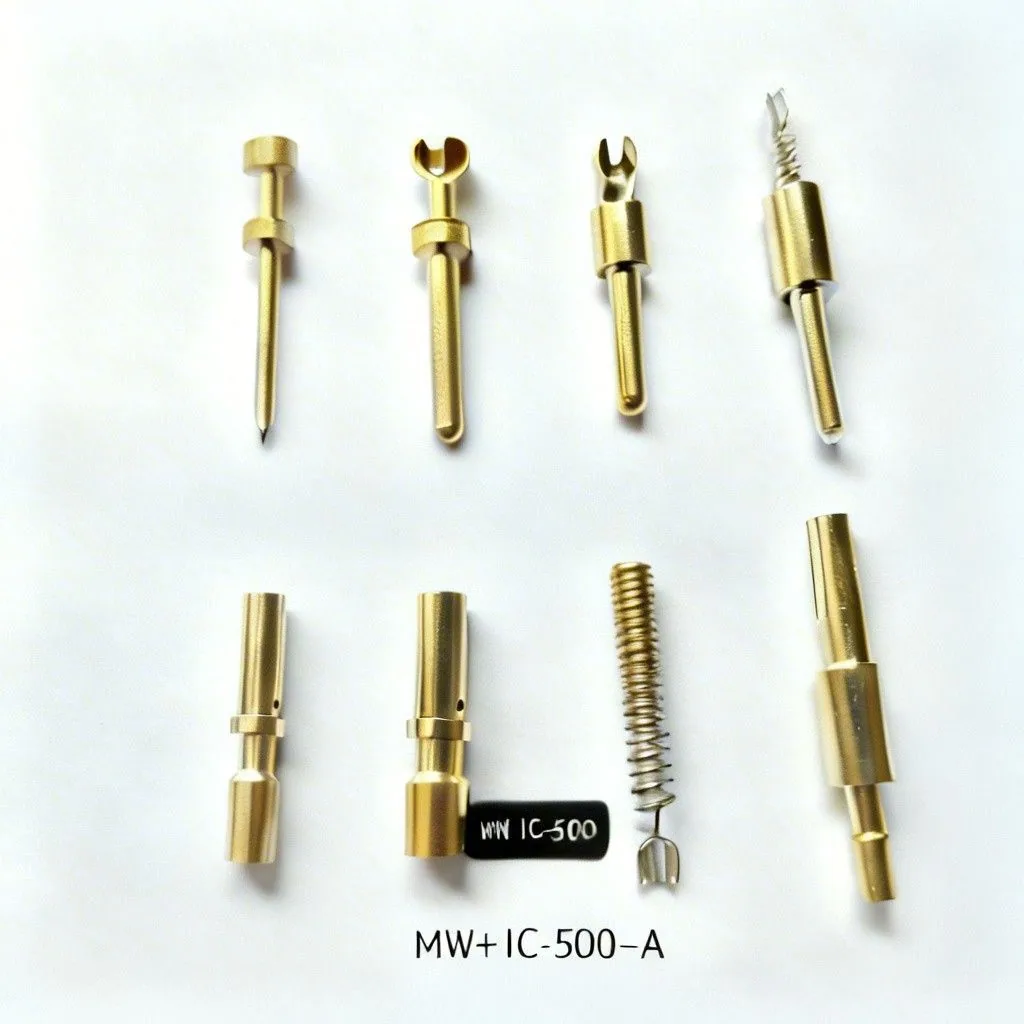
Shielded Ground Pin
Shield-termination pins machined for EMI grounding paths, tin- or gold-plated to match connector shell requirements.
Miniature Terminal Pin
Compact tin-plated terminals turned from copper and brass for PCB and wire-to-board connections, sized for tight-pitch layouts.
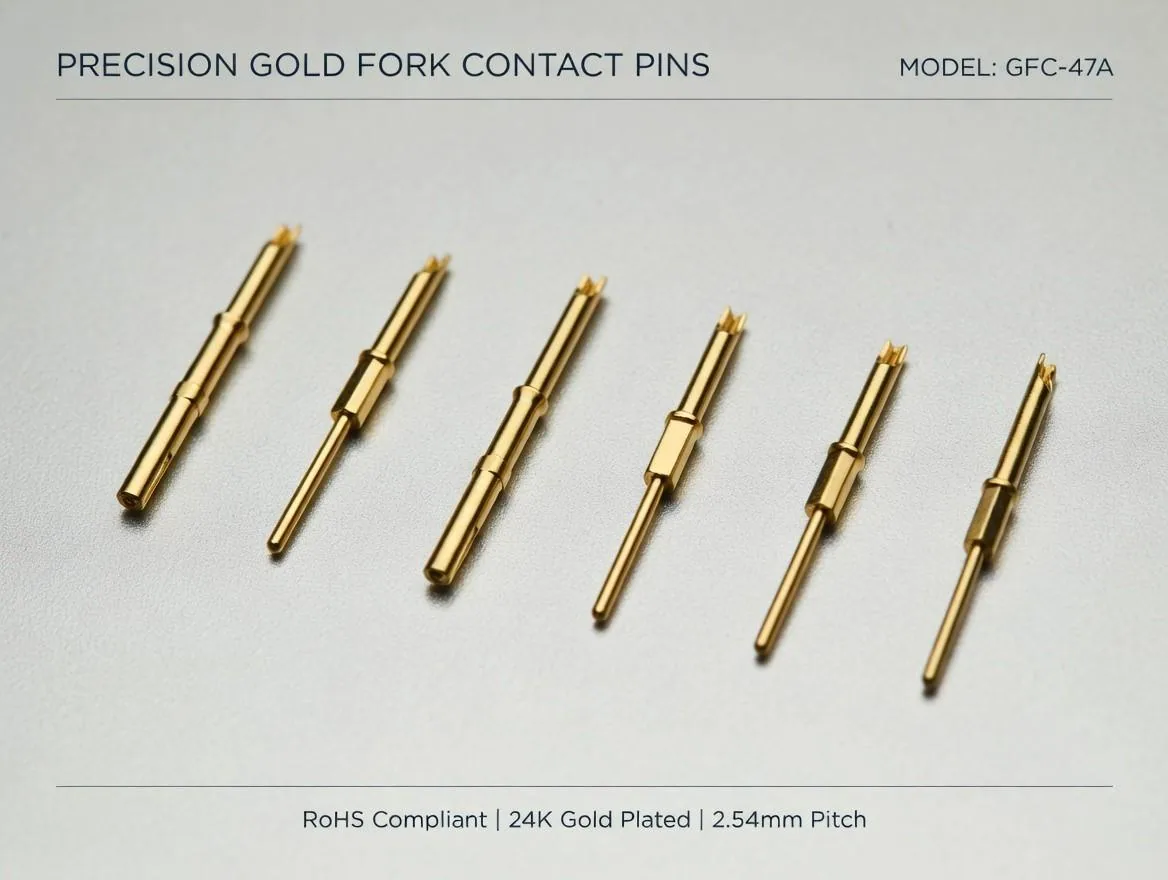
Press-Fit Terminal
Compliant press-fit terminals machined for backplane assembly, tin-over-nickel plated to eliminate solder joints on high-density boards.
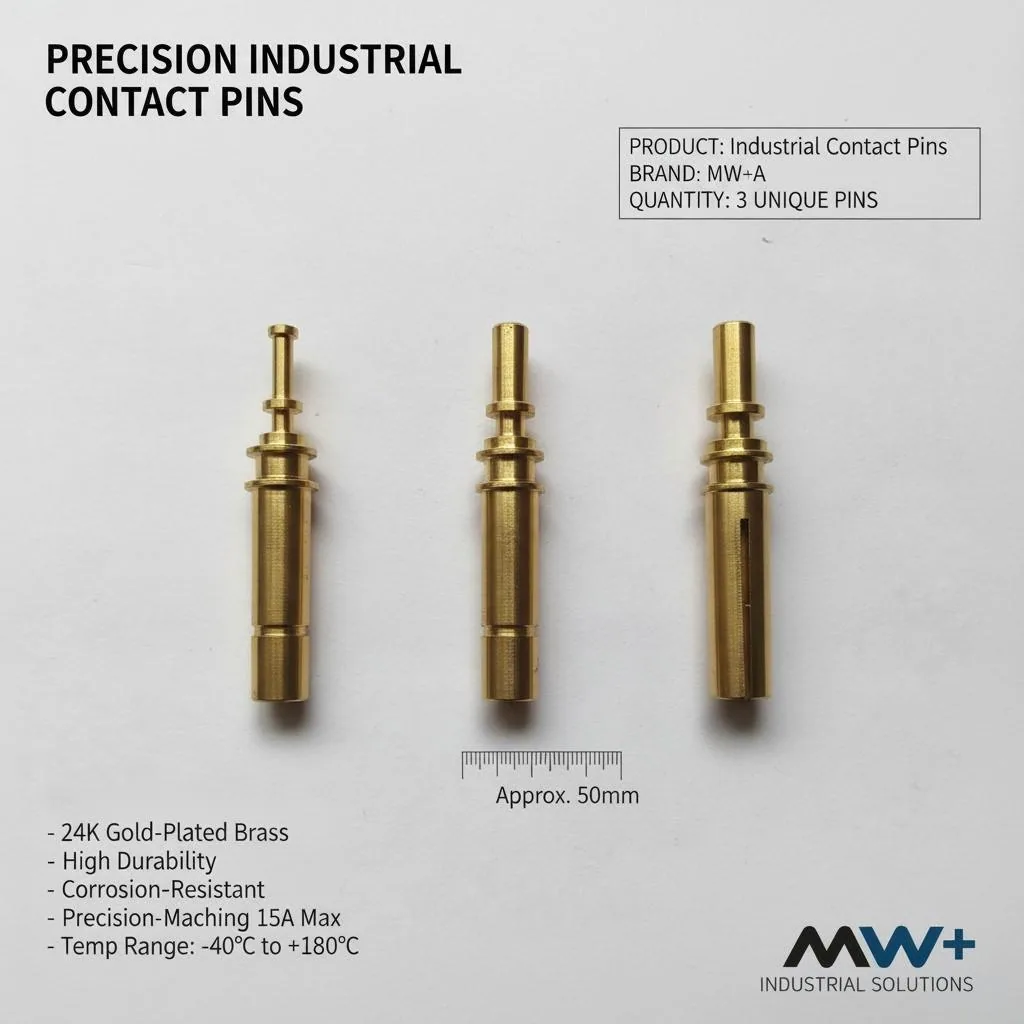
Gold Flash Terminal
Flat-face phosphor bronze terminals with flash gold plating, machined for reliable SMT solder-pad contact.
SMT Solder Pin
Through-hole and SMT solder pins tin-over-nickel plated and solderability-tested per batch, for consistent reflow performance.
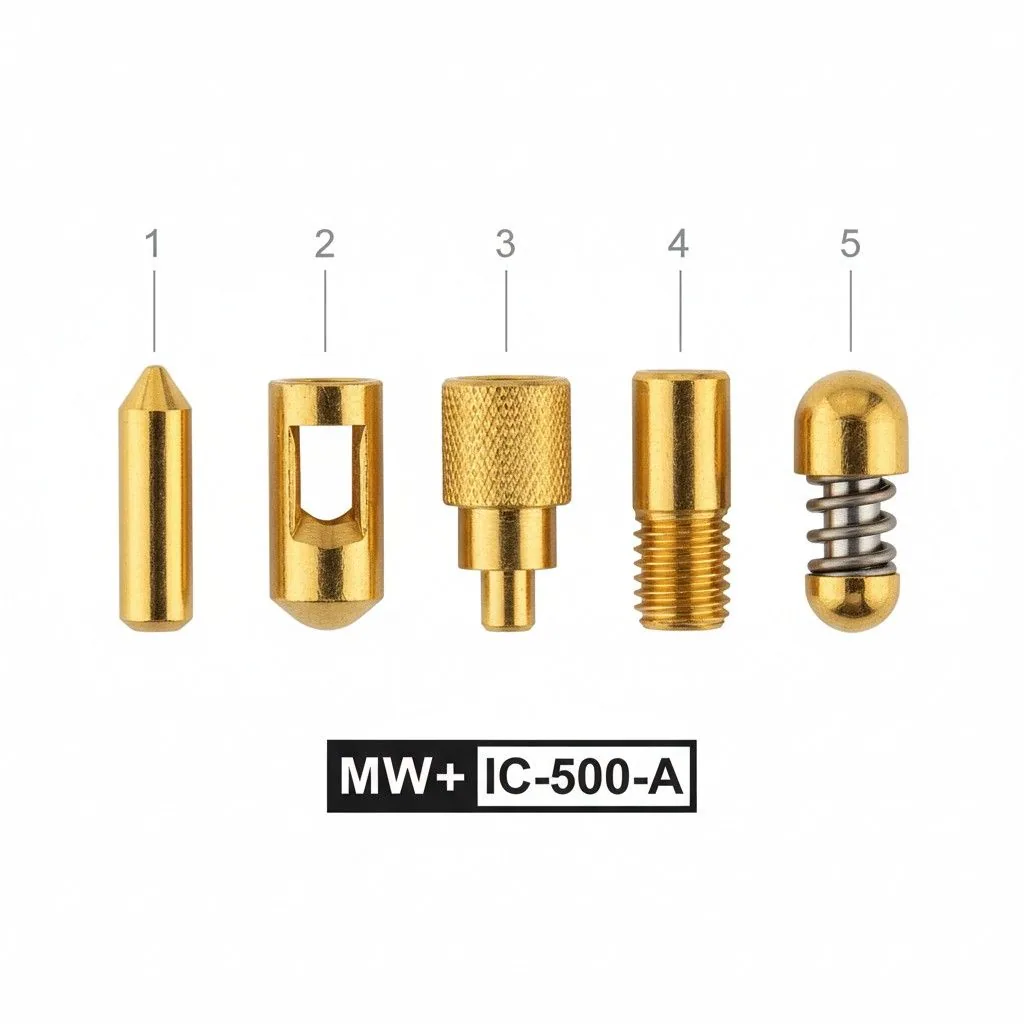
Brass Machined Pin
Heavy machined brass pins with nickel plating and milled flats, built for high-strength connectors in industrial machinery.
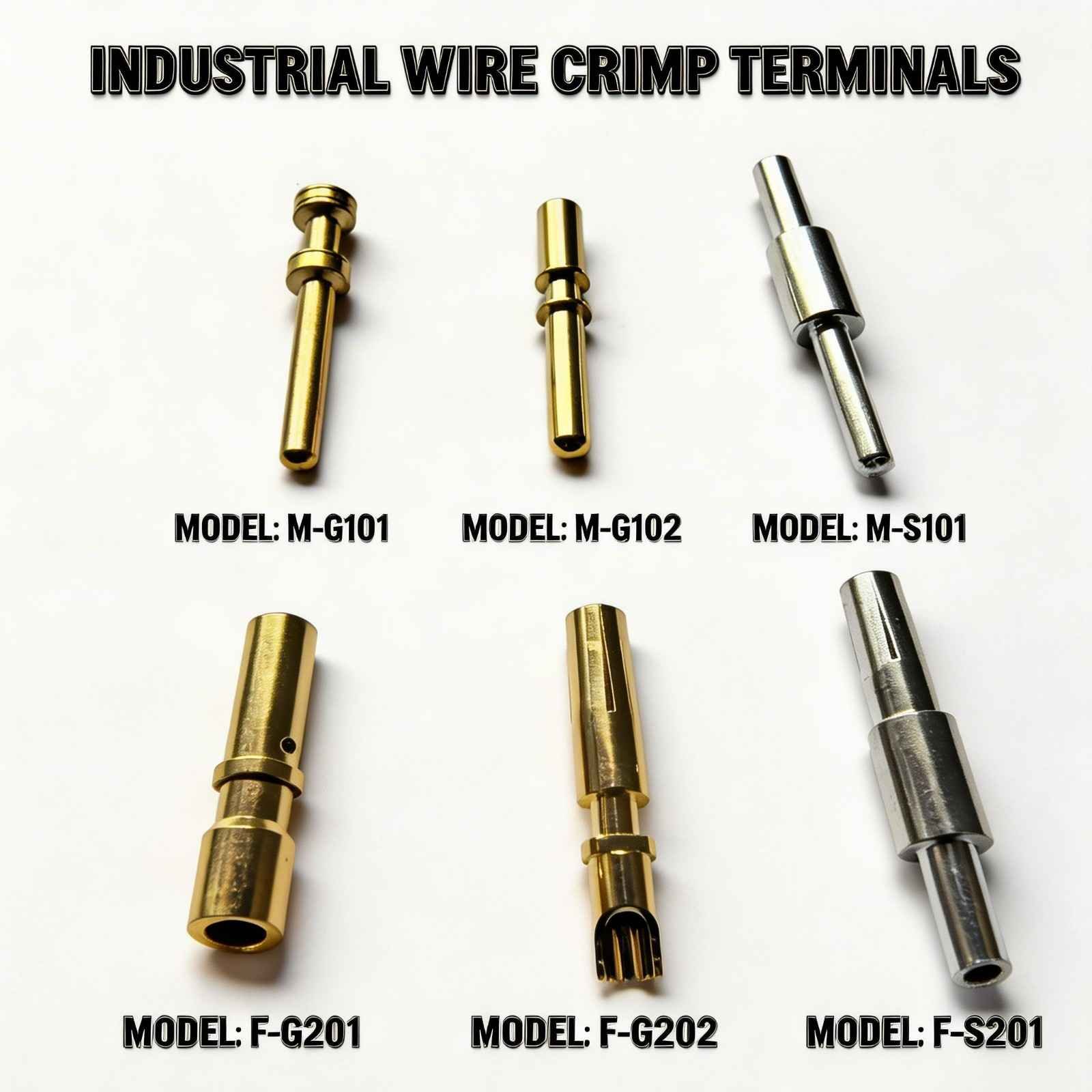
Flanged Mount Pin
Flanged stainless pins passivated for panel-mount connectors, machined with a secure mounting shoulder for repeated field service.
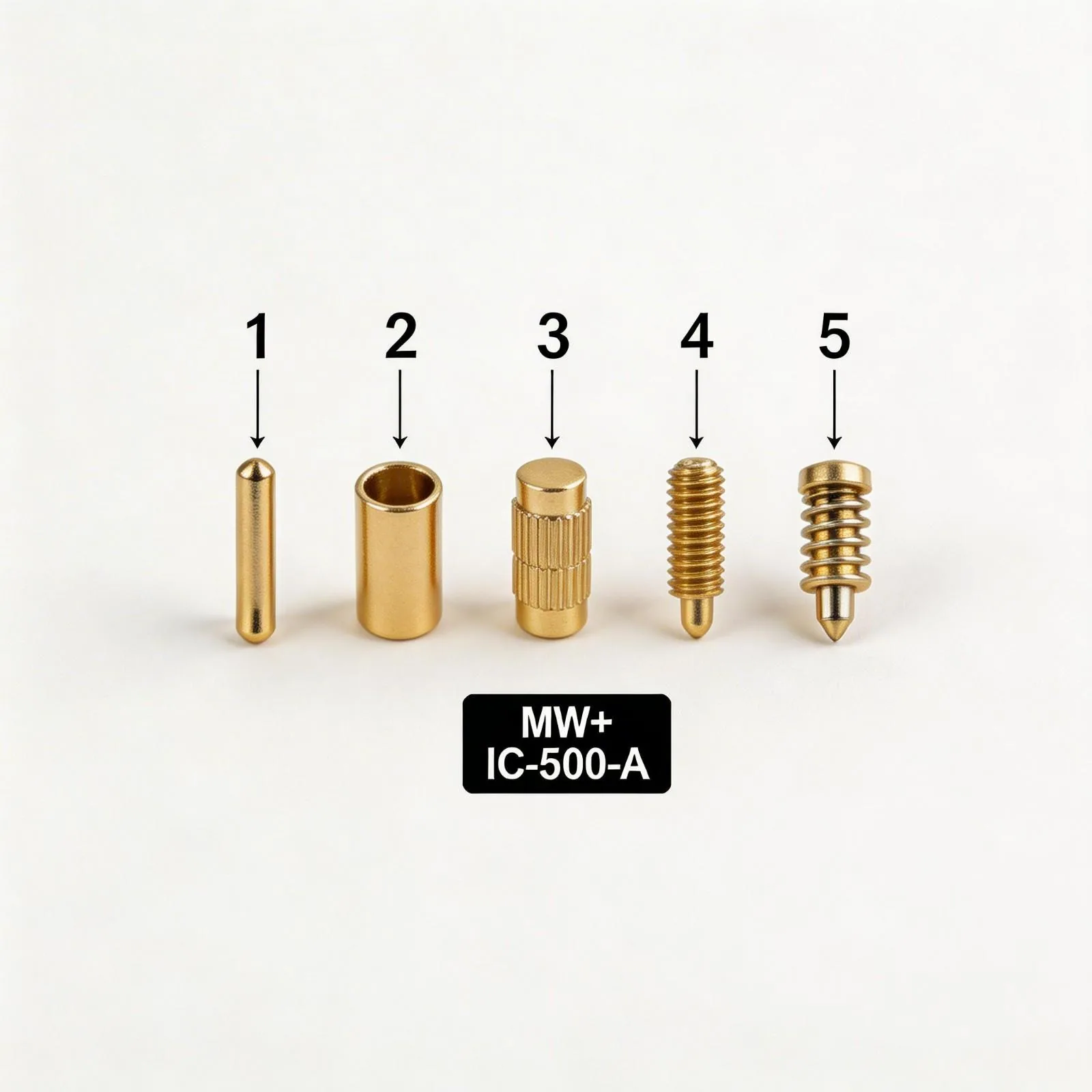
High-Temp Alloy Pin
Inconel 718 pins machined for aerospace and turbine sensor applications, holding performance across an extreme -200°C to 700°C range.
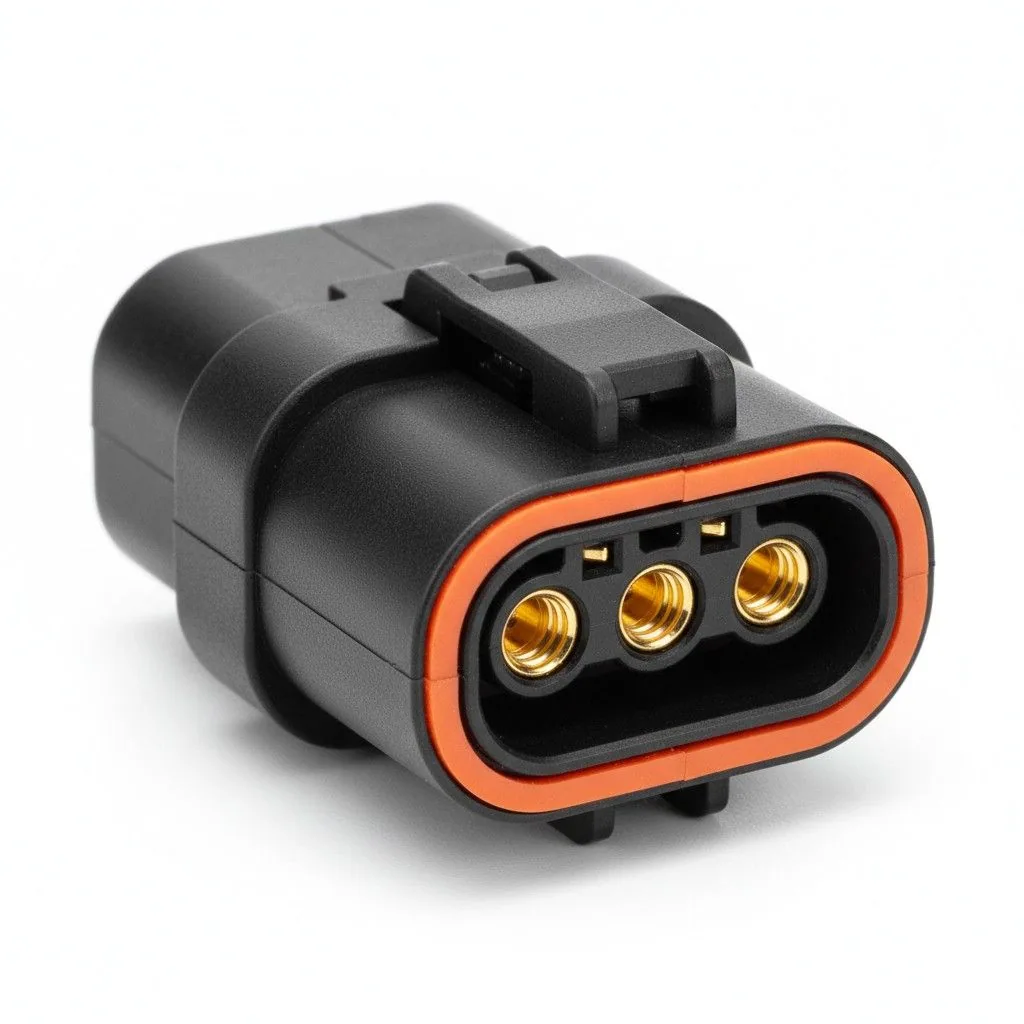
Custom Threaded Pin
Threaded industrial pins machined to M2-M8 standard, zinc- or nickel-plated for corrosion resistance in heavy equipment.
Automotive Sensor Pin
Sealed stainless sensor pins gold-plated for TPMS and ABS systems, machined vibration-proof to IATF 16949 standards.
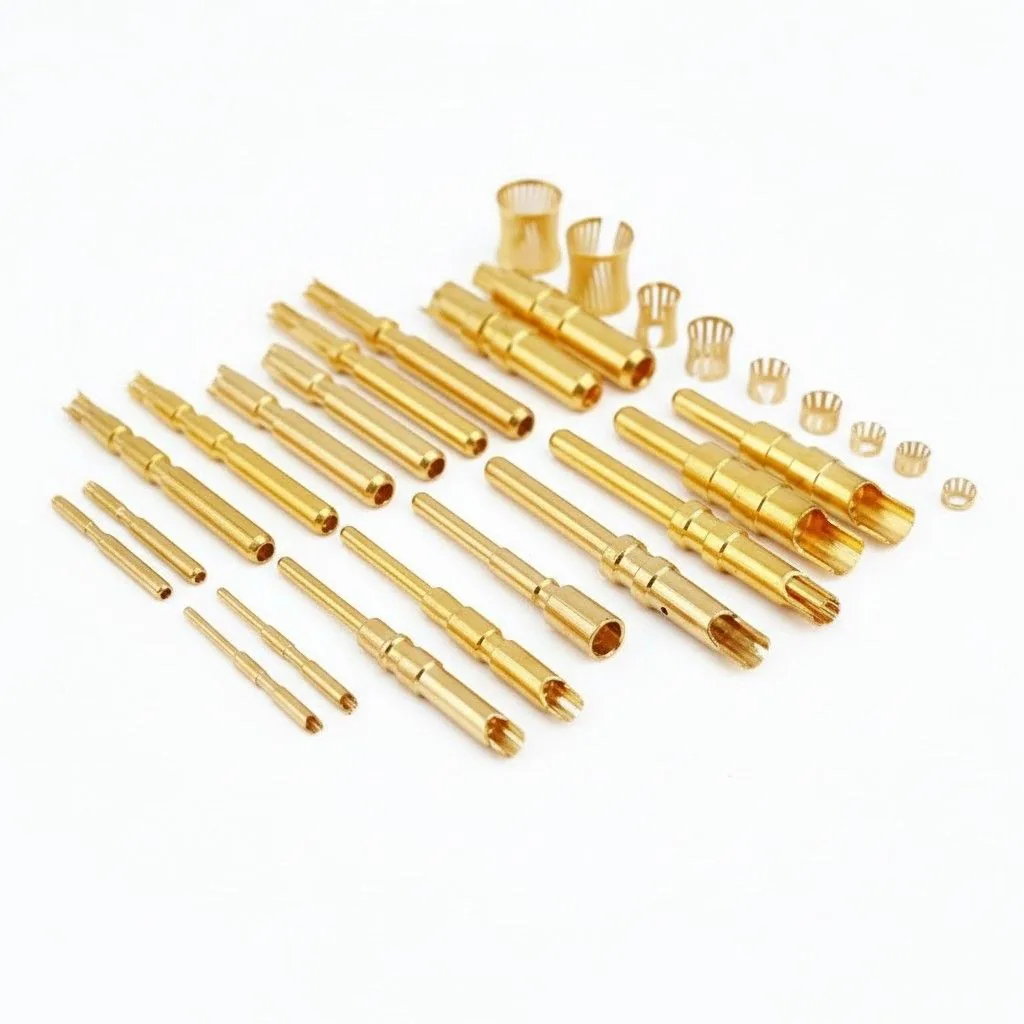
Heavy-Duty Industrial Pin
Oversized steel and brass pins for heavy equipment connectors, zinc- or nickel-plated to withstand high mechanical load and outdoor exposure.
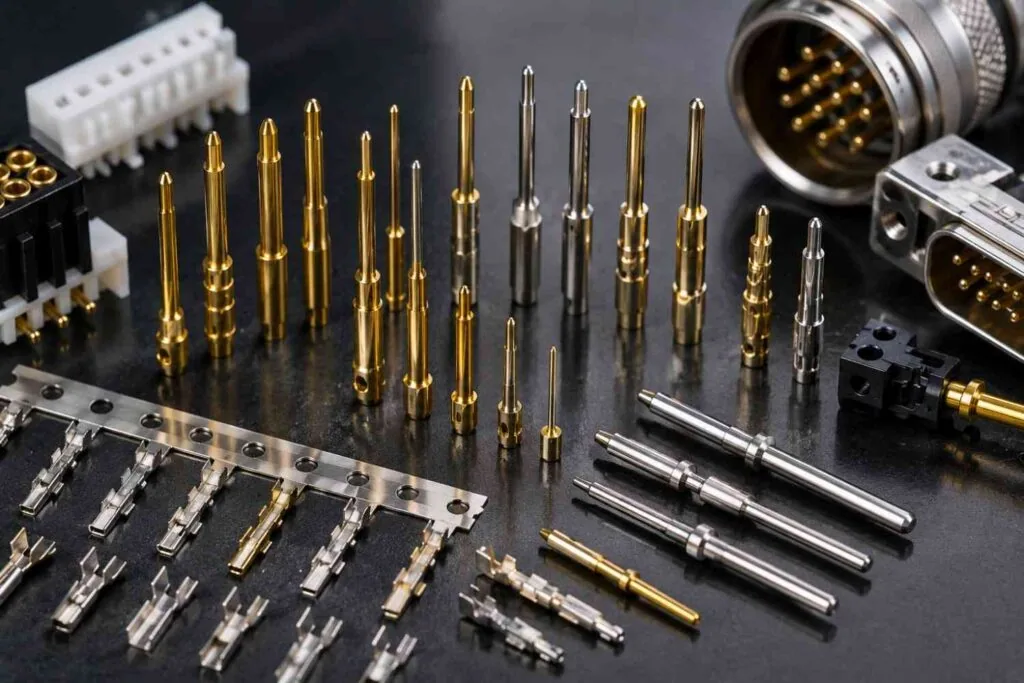
Beyond the catalogue
Any pin you can draw
Every sample above began as a drawing. Send a dimensioned PDF or a STEP file and you will have an itemised quote inside one business day.
- Signal, power, RF, pogo and terminal pins from one drawing
- Turned on Swiss-type lathes, finished on multi-axis centres, micro headers on micro-machining
- Drop-in replacements for obsolete or long-lead catalogue pins
- Reverse engineering from a sample pin, plus free DFM review
Tolerance, material, plating and what they cost
Everything a buyer checks before sending a drawing. Turned diameters are held to ±0.005 mm as standard, ±0.001 mm ground, measured on a Zeiss CMM.
Connector pin specifications
Five tables covering tolerance, alloy, plating, inspection and lead time.
What tolerance can you actually hold on a connector pin?
| Feature | Standard | Precision | How it is achieved |
|---|---|---|---|
| Turned outside diameter | ±0.010 mm | ±0.005 mm | Swiss-type lathe, guide bushing, single setup |
| Ground diameter | ±0.005 mm | ±0.001 mm | Centreless / OD grinding after turning |
| Overall length | ±0.050 mm | ±0.010 mm | Programmed cut-off, in-process gauging |
| Shoulder / step position | ±0.025 mm | ±0.008 mm | Same-setup turning, no re-fixturing |
| Concentricity (TIR) | 0.010 mm | 0.005 mm | Guide-bushing support, live tooling |
| Tip / chamfer angle | ±1° | ±0.5° | Form tool, optical comparator check |
| Metric thread class | 6g | 4h | Thread whirling or single-point |
| Surface roughness | Ra 0.8 µm | Ra 0.2 µm | Finish pass, polished insert, profilometer |
| Plating thickness | ±20% | ±10% | XRF verification, every production run |
Choosing the right alloy for your connector pin
| Material | Conductivity (%IACS) | Machinability | Why you would choose it |
|---|---|---|---|
| Brass C360 | 28% | Excellent (100% rating) | Lowest cost, fastest cycle time. Default for signal and terminal pins |
| Phosphor bronze C51000 | 15% | Good | Spring temper and fatigue life — contacts that flex on every mate |
| Beryllium copper C17200 | 22% | Good | Highest strength with spring behaviour. High-cycle and high-current contacts |
| Stainless 303 | 2.5% | Good (free-machining) | Structural and alignment pins where corrosion matters more than conduction |
| Stainless 316L | 2.4% | Fair | Medical and marine environments, autoclave and saline exposure |
| Titanium Gr. 2 / Gr. 5 | ~1% | Fair | Strength-to-weight and biocompatibility — aerospace and implantable devices |
| Inconel 718 | 1.4% | Difficult | Continuous service to 700 °C, downhole and turbine sensor pins |
| Kovar | 3% | Fair | Thermal expansion matched to glass and ceramic — hermetic feedthroughs |
| PEEK / Nylon / Acetal | Insulator | Good | Isolators, spacers and housings machined alongside the metal pins |
Plating options for machined contact pins
| Finish | Typical thickness | Mating cycles | Best for |
|---|---|---|---|
| Hard gold over nickel | 0.76 µm (30 µin) | 10,000+ | Signal integrity and high cycle life. The reference finish |
| Gold flash over nickel | 0.05–0.20 µm | Under 500 | Low-cycle or one-time-mate contacts at lower cost |
| Silver | 2–5 µm | Moderate | Highest conductivity — high-current power pins. Tarnishes in air |
| Tin (matte) | 2.5–8 µm | Under 100 | Solderable, low cost. Matte deposit reduces whisker risk |
| Nickel (underplate) | 1.27–2.5 µm | — | Diffusion barrier under every precious-metal finish |
| Palladium-nickel + gold flash | 0.5–1.5 µm | 5,000+ | Gold-like performance at lower precious-metal cost |
| Passivation (stainless) | Conversion layer | — | Corrosion resistance on 303/316L without added thickness |
How every connector pin is inspected before it ships
| Check | Method | Frequency |
|---|---|---|
| Dimensional | Zeiss CMM | First article plus batch sampling |
| Plating thickness | X-ray fluorescence (XRF) | Every production run |
| Surface finish | Profilometer, Ra verified to drawing | First article plus sampling |
| In-process | Operator gauging at set frequency | Through the run |
| Material | Mill certificate, traceable by heat lot | Every batch |
| Documentation | CMM report and certificates | Ship with the parts |
Minimum order quantity, pricing drivers and lead times
| Order type | Quantity | Typical lead time | Included |
|---|---|---|---|
| Prototype / first article | 1–50 | 3–5 business days | CMM report, material cert |
| Pilot run | 50–1,000 | 10–15 working days | CMM report, XRF plating report |
| Production batch | 1,000–100,000 | 15–25 working days | Full inspection package, batch traceability |
| Scheduled release | 100,000+ per year | Called off against forecast | Full inspection package, batch traceability |
What actually drives the price of a machined pin
- Cycle time — length, number of features, and whether the pin can be parted off complete in one setup.
- Material — brass machines two to three times faster than stainless, and Inconel slower again. Bar cost and machinability compound.
- The tightest band on the drawing — a single ±0.001 mm feature adds a grinding operation and 100% inspection.
- Plating — gold thickness is a direct precious-metal cost. Selective plating usually saves more than any other single change.
- Documentation — material certs and a CMM report are included; full PPAP or first-article submission to AS9102 is quoted separately.
Who these pins are built for
Real production orders across six industries. If the process you need is not here, it is on one of these.
Automotive & EV
Battery connectors, sensor pins, high-voltage contact pins — IATF 16949 certified production for Tier 1 suppliers.
Medical Devices
Implantable metal pins, diagnostic equipment contacts, ISO 13485 clean-room manufacturing with full traceability.
Consumer Electronics
USB connector pins, pogo pins, micro-coaxial contacts with cycle life exceeding 10,000 mates.
Aerospace & Defense
Mil-spec terminal pins, high-vibration turned pins, corrosion-resistant alloys including Kovar and Inconel.
Industrial Equipment
Heavy-duty threaded pins, panel-mount connectors, high-load contacts for global machinery builders.
Telecom & RF
50Ω coaxial pins, shielded ground contacts, and micro headers for base-station and network hardware.
Trusted by engineering teams worldwide
“Their connector pins hold ±0.001–0.005 mm consistently across huge order volumes. XRF plating reports ship with every batch — exactly what our automotive audits need.”
— Procurement Lead, Tier 1 Automotive (Germany)
“We switched our micro header pins to MetalWorks Plus for the tolerance alone. Lead times on prototypes are faster than any supplier we’d used before.”
— Hardware Engineer, Wearables Startup (USA)
“Reliable gold plating on every run of our RF connector pins. Communication across time zones has never slowed our production schedule.”
— Sourcing Manager, Telecom OEM (South Korea)
What is a machined connector pin?
The short definition, and where a turned pin beats a stamped contact.
A machined connector pin is a precision-turned metal contact that carries signal, power or ground between two halves of an electrical connector. Unlike stamped contacts, which are punched and formed from flat strip, a machined pin is cut from solid bar on a lathe — so its diameter, concentricity and tip geometry are held to a few microns rather than a few hundredths of a millimetre.
That is why machined pins are specified wherever mating force, contact resistance and cycle life must stay predictable: medical instruments, test fixtures, RF interconnects and aerospace connectors.
The trade-off is cost per piece. Stamping is cheaper at high volume; machining wins on tolerance, on round or complex geometry, and on any run too small for a stamping die to pay for itself.
Every pin here is turned on Swiss-type CNC lathes and CNC turning centres in Shenzhen. Slender pins above roughly 8:1 length-to-diameter run on the Swiss machines, where the guide bushing stops the bar deflecting. Sub-millimetre diameters and micro headers move to micro-machining; cross-holes and flats are finished on multi-axis centres in the same setup.
Machined pins vs. stamped contacts
| Factor | Machined (turned) pin | Stamped contact |
|---|---|---|
| Diameter tolerance | ±0.005 mm turned, to ±0.001 mm ground | ±0.05 mm typical |
| Tooling cost | None — program and bar stock only | Progressive die, weeks of lead time |
| Economic quantity | 1 piece to ~500,000/year | Above ~250,000/year |
| Geometry | True round, deep bores, threads, undercuts | Formed sheet, limited round features |
| Design change | Edit the program, run the same day | Re-cut or replace the die |
| Material options | Any bar-stock alloy, incl. Inconel, titanium, Kovar | Limited to formable strip |
| Typical prototype lead time | 3–5 business days | 6–12 weeks including tooling |
← scroll the table sideways →
Connector pins: questions buyers ask first
The questions our engineers are asked most often when a new connector pin enquiry comes in.
What tolerance can you hold on connector pins?
What tolerance can you hold on connector pins?
Standard turned diameters are held to ±0.005 mm on our Swiss-type lathes. Where the drawing requires it we add a grinding operation and hold ±0.001 mm on the controlling diameter. Lengths are typically ±0.050 mm standard and ±0.010 mm precision. Every first article is measured on a Zeiss CMM and the report ships with the parts.
What is the minimum order quantity for machined pins?
What is the minimum order quantity for machined pins?
There is no fixed minimum. We machine single prototype pins and we run production batches in the hundreds of thousands. Because setup and first-article inspection are fixed costs spread across the batch, unit price falls sharply between 50 and 1,000 pieces and then flattens out.
Which materials and finishes do you work with?
Which materials and finishes do you work with?
Most pins are brass C360, phosphor bronze C51000 or beryllium copper C17200. We also machine stainless 303, 304 and 316L, titanium Gr. 2 and Gr. 5, Inconel 718, Kovar, and engineering plastics including PEEK, nylon and acetal — 70+ materials in total. Finishes cover hard gold, gold flash, silver, matte tin, nickel underplate, palladium-nickel and passivation for stainless.
How fast can you turn around a quote and a sample?
How fast can you turn around a quote and a sample?
Quotes are returned within 24 hours of receiving a drawing or CAD file. Prototype and first-article pins typically ship in 3–5 business days from drawing approval; plating adds roughly three to five days.
Do you ship outside China?
Do you ship outside China?
Yes. MetalWorks Plus ships to more than 50 countries by DHL, FedEx and air freight, door to door, with customers concentrated in the USA, Europe and Asia. Freight is quoted at the same time as the parts.
What file formats do you need to quote a connector pin?
What file formats do you need to quote a connector pin?
STEP and IGES are ideal, and we also accept SolidWorks, DXF and PDF. For a simple turned pin a dimensioned PDF drawing is enough on its own. If you only have a physical sample or an obsolete part number, we reverse-engineer from the part and the measurement report becomes your drawing.
Can you machine beryllium copper pins safely?
Can you machine beryllium copper pins safely?
Yes. Beryllium copper C17200 is machined wet on dedicated equipment with local extraction, which controls the airborne particulate that makes dry machining of the alloy hazardous. It is our standard choice where a contact needs spring behaviour and high current capacity in the same part.
How thick should gold plating be on a contact pin?
How thick should gold plating be on a contact pin?
It follows the cycle-life requirement. Hard gold at 0.76 µm (30 µin) over nickel is the reference specification for contacts rated above 10,000 mating cycles. A 0.05–0.20 µm gold flash is sufficient below about 500 cycles and costs substantially less. Palladium-nickel with a gold flash gives close to hard-gold performance at a lower precious-metal cost.
Can you provide PPAP or first article inspection documentation?
Can you provide PPAP or first article inspection documentation?
Yes. A CMM dimensional report, XRF plating-thickness report and material certificate ship with every order as standard. Full PPAP submission and AS9102 first article reports are available and are quoted separately, because they add inspection and paperwork hours rather than machining time.
Can you replace an obsolete or long-lead catalogue pin?
Can you replace an obsolete or long-lead catalogue pin?
This is one of the most common reasons customers come to us. Send the obsolete part number, a datasheet or a sample pin; we measure it, produce a drawing for your approval, and machine a drop-in replacement. There is no tooling cost, so the replacement is economic even at low annual volumes.
Should I use a machined pin or a stamped contact?
Should I use a machined pin or a stamped contact?
Machining wins below roughly 250,000 pieces a year, on any round or deep-bored geometry, and wherever diameter tolerance and concentricity have to be held tightly. Stamping wins on unit price at high volume once the die is paid for. If your stamped contact is failing a tolerance or cycle-life requirement, converting it to a machined pin is usually the fastest fix because there is no tooling to re-cut.
Do you machine matching receptacles, housings and other components?
Do you machine matching receptacles, housings and other components?
Yes. Receptacles, sleeves, isolators and machined housings are produced alongside the pins, so the mating pair is controlled to one drawing set and one inspection plan. Broader component work is covered under CNC precision parts and machine parts.
Send your drawing, get a quote in 24 hours
A PDF drawing and a quantity is enough to quote. Only have a sample pin or a competitor part number? Say so — we reverse-engineer from a physical part regularly.
How ordering works
Send the drawing
STEP, IGES, DXF or PDF. A dimensioned PDF is enough for a simple turned pin. Include the quantity and any spec you must meet.
Free DFM review
An engineer flags anything adding cost without function — over-tight bands, needless grinding, plating on surfaces that never make contact.
Quote within 24 hours
Unit price at your quantity, lead time and the inspection documentation included. Quotes hold for 30 days.
Sample approval
First articles are measured on the CMM and shipped with the report. Nothing enters production until you sign off.
Production and shipping
Full run with in-process gauging and XRF plating checks, then DHL, FedEx or air freight to 50+ countries.
Connector Pins & Machined Pins quote request
Send a dimensioned drawing, a sample pin or a part number from the catalogue above. An engineer replies within one business day with unit price at your volume and free DFM feedback.