What Are Connector Pins? A Complete Introduction
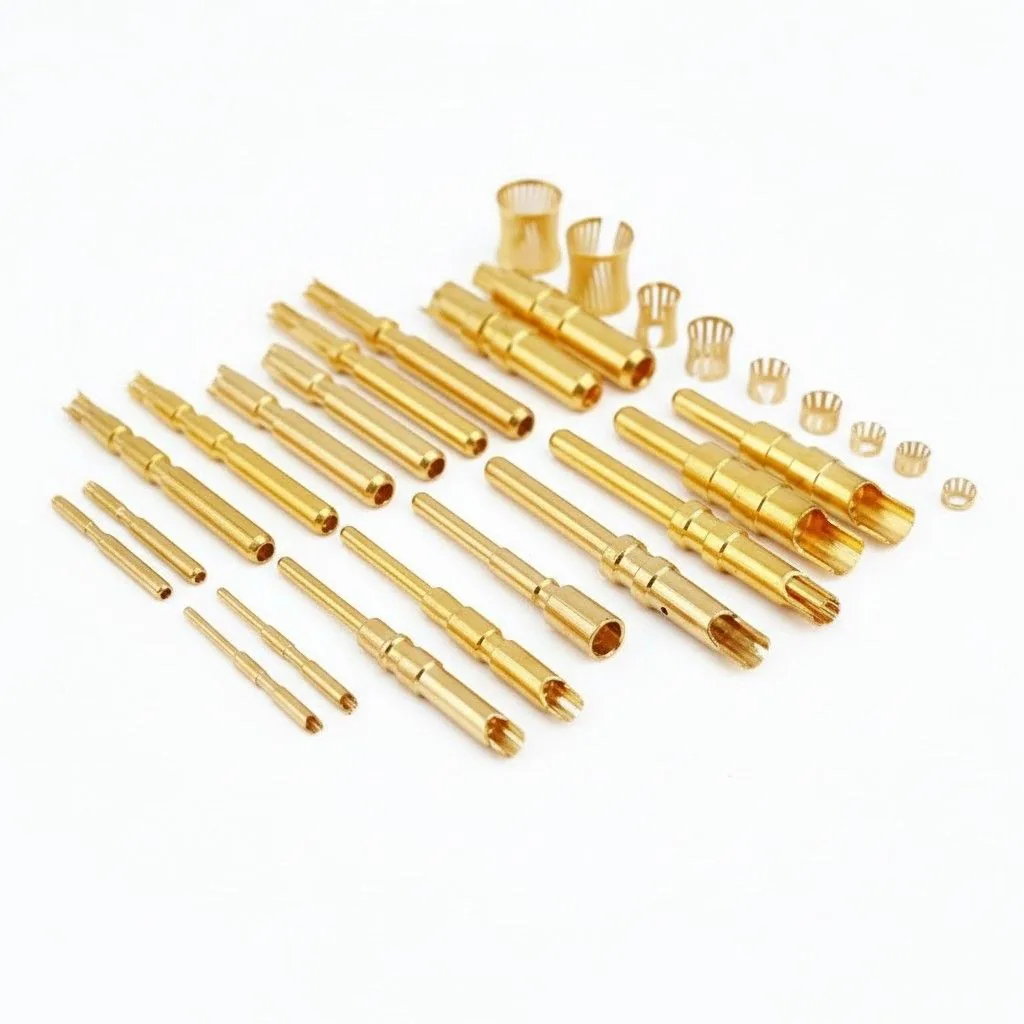
Connector pins are the fundamental building blocks of every electrical and electronic interconnect system. Whether in a consumer smartphone, an industrial robot, a life-saving medical device, or a satellite in orbit, connector pins serve one irreplaceable function: creating a reliable, low-resistance electrical pathway between two or more components.
At their core, connector pins are precision-engineered conductive elements — typically metallic — designed to mate with a corresponding socket, receptacle, or terminal. The quality, material, geometry, and finish of a connector pin directly determine the performance, longevity, and safety of the entire electrical system it serves.
As electronic systems grow smaller, faster, and more complex, the demand for connector pins and machined pins has never been greater. Understanding the full scope of connector pin technology is essential for engineers, procurement specialists, and product designers who need to make informed decisions about their interconnect solutions.
Types of Connector Pins: A Deep Dive
The connector pin landscape is broad, with each type engineered to address specific electrical, mechanical, and environmental requirements. Here is a detailed overview of the most widely used connector pin types:
1. 🔧 Machined (Turned) Connector Pins
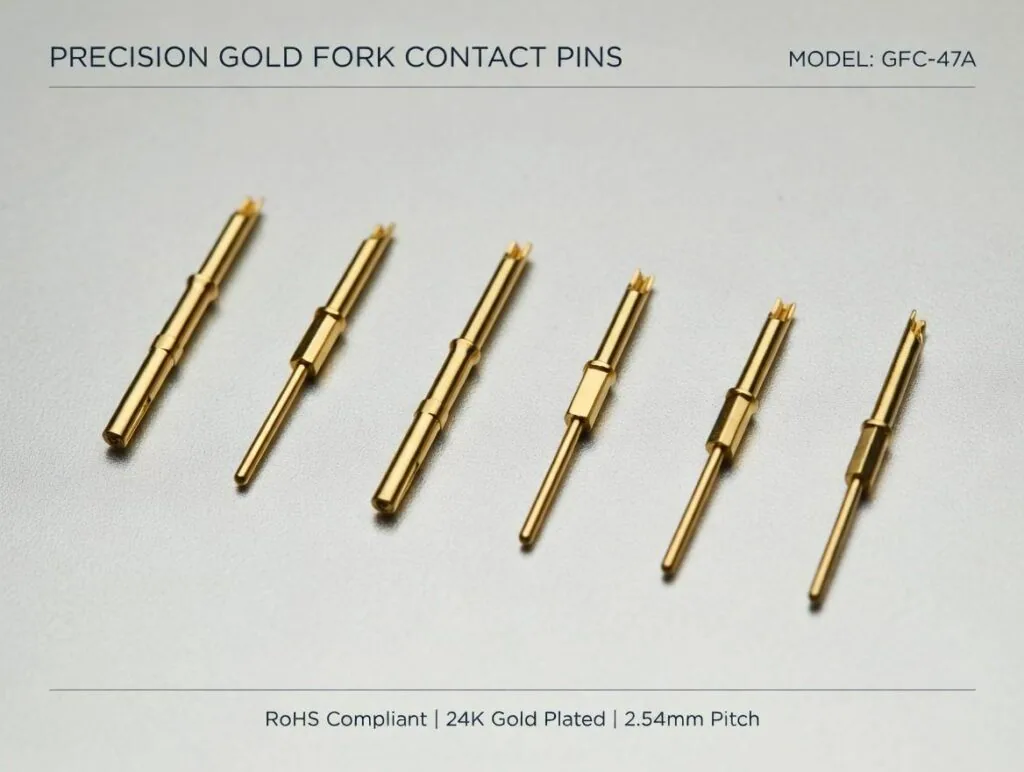
Manufactured via CNC-turning or screw-machining from solid metal rods, machined connector pins offer the highest dimensional accuracy available. These are the gold standard for:
- High-reliability PCB-to-PCB interconnects
- Military and aerospace applications (MIL-SPEC)
- High-cycle applications requiring 10,000+ mating cycles
- IC sockets and test & measurement equipment
Tolerances as tight as ±0.005 mm make machined connector pins ideal wherever signal integrity and contact resistance consistency are non-negotiable.
2. 🗜️ Stamped & Formed Connector Pins
Produced by stamping metal sheets into complex shapes, these connector pins offer a cost-effective solution for high-volume applications:
- Automotive wire harnesses and ECU connectors
- Consumer electronics and white goods
- Power distribution boards
- Standard USB, HDMI, and audio connectors
While not as dimensionally precise as machined pins, stamped connector pins excel in mass production environments where cost-per-unit is critical.
3. ⚡ Press-Fit Connector Pins
Press-fit connector pins feature a compliant zone that deforms slightly upon insertion into a PCB through-hole, creating a gas-tight, solderless connection:
- Ideal for backplanes and high-density server boards
- Used extensively in automotive ECUs and power modules
- Eliminates solder joint reliability concerns
- Supports rework and field replacement
4. 🌀 Spring-Loaded (Pogo) Connector Pins
Spring-loaded connector pins use an internal spring mechanism to maintain constant contact pressure, compensating for mechanical tolerances and vibration:
- Battery charging contacts in portable devices
- Bed-of-nails test fixtures
- Wearable electronics and IoT devices
- Rotating or sliding interface assemblies
5. 🔌 Crimp Connector Pins
Crimp-style connector pins are attached to wire ends through a mechanical compression process, creating a cold-weld gas-tight joint without soldering:
- Automotive and aerospace wire harnesses
- Industrial control panels and PLCs
- Military field-deployable systems
- High-vibration environments where solder joints may fatigue
6. 🏗️ Pin Headers & Male/Female Connector Pins
The ubiquitous pin header connector pins — single or double row, straight or right-angle — are found in virtually every PCB development environment:
- Arduino, Raspberry Pi, and development boards
- Sensor module interconnects
- JTAG, SWD, and programming interfaces
- Board-to-board stacking configurations
🪨 Connector Pin Materials: The Foundation of Performance
The material composition of a connector pin directly governs its electrical conductivity, mechanical strength, corrosion resistance, and temperature performance. Selecting the right material is one of the most critical engineering decisions in connector pin specification.
| Material | Conductivity | Strength | Corrosion Resistance | Best Application |
| Brass (C360) | Good | Moderate | Moderate | General-purpose connector pins |
| Phosphor Bronze | Good | High | Good | High-cycle spring contact pins |
| Beryllium Copper | Excellent | Very High | Good | RF, high-frequency, precision pins |
| Stainless Steel | Moderate | Very High | Excellent | Harsh environment connector pins |
| Copper Alloy C151 | Excellent | Moderate | Moderate | High-current power pins |
Surface Plating for Connector Pins
The base material alone rarely suffices — surface plating enhances performance dramatically:
- 🥇 Gold (Au): The premium choice for signal-level connector pins; 0.2–1.27 µm over a nickel underplate delivers ultralow contact resistance and outstanding oxidation immunity
- 🥈 Tin (Sn) / Tin-Lead: Cost-efficient for power connector pins; excellent solderability; ensure whisker mitigation strategies for pure tin
- ⚪ Silver (Ag): Highest conductivity of all metals; used in high-current and RF connector pins; requires tarnish-prevention strategies
- 🔵 Nickel (Ni): Hard, wear-resistant barrier coating; standard underplate for most plated connector pins
- 🟤 Palladium-Nickel (PdNi): A cost-effective gold alternative for connector pins in high-cycle applications
🏭 Connector Pin Manufacturing: Precision at Every Stage
The manufacturing process for high-quality connector pins is a multi-stage operation where precision, process control, and quality assurance work in concert.
Stage 1 — Raw Material Selection & Verification
Every connector pin production run begins with rigorous incoming material inspection:
- Chemical composition analysis via XRF (X-Ray Fluorescence) spectroscopy
- Mechanical property verification — tensile strength, hardness, elongation
- Dimensional inspection of raw rod or sheet stock
- Surface condition assessment for defects or contamination
Stage 2 — Precision Machining or Stamping
- CNC Turning (Machined Pins): Multi-axis CNC Swiss-type lathes hold tolerances to ±0.005 mm across millions of connector pin units
- Progressive Die Stamping: High-speed presses form connector pins from strip metal at rates that can run to several hundred parts per minute
- Burr Removal: Vibratory deburring, electrochemical deburring, or precision tumbling ensures smooth surfaces that prevent connector wear
- Annealing: Heat treatment relieves internal stresses introduced during forming — critical for beryllium copper connector pins
Stage 3 — Electroplating
- Alkaline cleaning and acid activation to prepare the connector pin surface
- Nickel underplate deposition — typically 1.27–2.54 µm for a diffusion barrier
- Final plate deposition (gold, tin, silver, PdNi) to specified thickness
- In-process plating thickness verification via X-Ray Fluorescence (XRF)
- Adhesion and porosity testing per ASTM B571 and the EIA-364 test procedures
Stage 4 — Quality Control & Testing
- 100% dimensional gauging, or statistical sampling to an AQL plan drawn from ISO 2859-1:2026
- Contact resistance measurement — typically <10 mΩ for signal connector pins
- Insertion and withdrawal force testing per EIA-364-13
- Salt spray / humidity testing for corrosion resistance validation
- Thermal shock cycling to verify plating adhesion integrity
🎯 Connector Pin Applications by Industry
Connector pins are mission-critical components across virtually every major industry. Here is how different sectors depend on precision connector pins:
✈️ Aerospace & Defense
- MIL-DTL-55302 and MIL-DTL-83513 qualified machined connector pins
- Circular connector pins for avionic rack systems (MIL-DTL-38999)
- Gold-plated connector pins for flight-critical signal paths
- Radiation-hardened connector pins for satellite payloads
🏥 Medical & Life Sciences
- Biocompatible connector pins for implantable devices
- High-reliability connector pins in surgical robotics and imaging systems
- Sterilization-resistant pins for reusable instrument interfaces
- Ultra-miniature connector pins for endoscopes and catheter-based devices
🚗 Automotive & EV
- High-current power connector pins for EV battery management systems
- Sealed crimp connector pins for under-hood environments
- High-speed data connector pins for ADAS and infotainment systems
- Tin-plated connector pins for CAN bus and LIN bus wiring harnesses
🏭 Industrial Automation & Robotics
- Heavy-duty power connector pins for servo drives and motor controllers
- Modular fieldbus connector pins (PROFIBUS, EtherCAT, IO-Link)
- Spring-loaded connector pins for tool-change robotic end-effectors
- Corrosion-resistant pins for food processing and wash-down environments
📡 Telecommunications & Data Centers
- High-speed differential pair connector pins for 100G/400G Ethernet
- Controlled-impedance connector pins for backplane systems
- SFP, QSFP, and OSFP module connector pins
- High-density mezzanine connector pins for blade server architectures
⚠️ Common Connector Pin Challenges & Engineering Solutions
Even the most carefully specified connector pins face real-world challenges. Understanding these failure modes — and their solutions — is key to designing reliable interconnect systems.
| Challenge | Root Cause | Engineering Solution |
| Fretting Corrosion | Micro-vibration causes oxide buildup at contact interface | Specify gold-plated connector pins; apply contact lubricant |
| Contact Resistance Drift | Surface oxidation or contamination over time | Use noble metal plating (Au, PdNi) on connector pins |
| Mechanical Wear | Excessive mating cycles degrades contact surface | Specify hard gold plating (HV 130–200) for high-cycle pins |
| Tin Whisker Growth | Pure tin plating develops conductive whiskers | Use tin-lead or matte tin with reflow; specify whisker-tested pins |
| Connector Pin Corrosion | Exposure to humidity, salt, or chemicals | Use sealed housings; specify nickel or gold plated pins |
| Signal Integrity Issues | Impedance mismatch at pin-to-PCB interface | Design controlled-impedance footprints; use matched connector pins |
| Thermal Derating | Excessive current causes pin overheating | Derate current per thermal testing; choose larger pin cross-sections |
| Misalignment Damage | Off-angle mating bends or breaks pins | Use guide pins/posts; specify chamfered lead-ins on connector pins |
📏 Connector Pin Quality Standards & Certifications
Specifying connector pins to recognized international standards ensures interoperability, reliability, and regulatory compliance:
- 📋 IPC-A-610: Acceptability of Electronic Assemblies — solder joint and assembly quality for PCB connector pins
- 📋 IPC-2221: Generic PCB Design Standard — pad, hole, and annular ring specifications for through-hole connector pins
- 📋 EIA-364: Electrical Connector and Socket Test Procedures — comprehensive testing for all connector pin types
- 📋 MIL-DTL-55302 / MIL-DTL-83513: Military-grade machined connector pins for defense applications
- 📋 UL 486A/B: Wire connectors and soldering lugs — relevant to crimp connector pins
- 📋 RoHS / REACH Compliance: Environmental compliance requirements for connector pin materials and plating
- 📋 IATF 16949: Automotive-sector quality management — governs automotive connector pin production
- 📋 ISO 9001:2015: Quality Management Systems — foundational certification for connector pin manufacturers
🚀 Future Trends in Connector Pin Technology
The connector pin industry is rapidly evolving in response to emerging technology demands. Key trends shaping the next generation of connector pins include:
- 🔬 Ultra-Miniaturization: Connector pins with pitches below 0.3 mm for next-gen wearables, hearing aids, and implantables
- ⚡ High-Speed Signal Integrity: Connector pins engineered for 112 Gbps PAM4 and beyond in data center applications
- 🔋 High-Power EV Connector Pins: Pins rated for 800V+ and 500A+ for ultra-fast EV charging infrastructure
- 🌡️ Extreme Environment Performance: Connector pins operating reliably from –65°C to +200°C for next-gen automotive and aerospace
- ♻️ Sustainable Materials: Development of RoHS-compliant, low-impact plating alternatives to reduce environmental footprint of connector pin production
- 🤖 AI-Driven Quality Control: Machine vision and deep learning systems inspecting at line speed, catching surface and geometry defects that sampled manual inspection cannot reach
- 🧲 Magnetic & Pogo-Hybrid Connector Pins: Self-aligning magnetic connector pins for tool-free, blind-mate connections in robotics and consumer devices
📊 Connector Pin Selection: Quick Reference Guide
| Requirement | Recommended Connector Pin Type | Suggested Plating |
| High-cycle signal interface | Machined / Turned Pin | Hard Gold over Nickel |
| Low-cost, high-volume power | Stamped & Formed Pin | Tin or Tin-Lead |
| Solderless PCB attachment | Press-Fit Compliant Pin | Tin or Gold |
| Vibration-resistant contact | Spring-Loaded Pogo Pin | Gold over Nickel |
| Field-wiring / harness | Crimp Connector Pin | Tin or Silver |
| Prototyping / development | Pin Header | Tin or Gold Flash |
What a pin supplier needs from your drawing
A connector pin quote is only as good as the callouts behind it. Six things decide whether the pin you receive behaves like the pin you specified: base material and temper; mating diameter and its tolerance; the plating stack, meaning underplate and final metal each with a thickness range; which surfaces must be plated; the mating cycle count the contact has to survive; and the current and temperature the pin will see in service. Omit the plating thickness range and two suppliers will quote two different parts at two different prices, and neither quote is wrong.
MW+ has machined this class of part since 2015, from a 15,000 m² plant in Shenzhen running 60+ CNC machining centres and 120+ engineering and quality staff, across 70+ materials and more than 50 countries. General tolerances are held to ±0.01 mm to ISO 2768-m, with a ±0.005 mm precision band and a ±0.001 mm floor quoted per feature rather than per part; capability on critical characteristics is targeted at Cpk ≥1.67. There is no minimum order quantity, quotes return within 24 hours, prototypes in 3–5 business days with a 48-hour express route, and volume production in 10–15 business days. Every order ships with a certificate of conformance, a CMM inspection report and material certificates. Long, slender pins are turned on Swiss machining equipment, which is what keeps deflection under control at high length-to-diameter ratios; the full range of connector pins and machined pins, and the housings and mating hardware in the wider precision machined products catalogue, are listed on the site.
When a machined pin is the wrong choice
A turned pin is not the default answer. At volumes in the millions on a simple geometry, a progressive-die stamped contact is cheaper per piece and the tooling amortises quickly; the dimensional advantage of turning buys nothing when the mating interface is a wide receptacle that was never going to use it. Where the joint has to tolerate misalignment and vibration rather than repeat a position exactly, a spring-loaded pogo contact outperforms a rigid turned pin. And where the pin is a catalogue item on an established connector series, buying the series manufacturer part keeps your qualification intact; a custom machined pin earns its place only once the geometry or the plating stack sits genuinely outside what the catalogue offers. The cost trade-offs behind that decision are set out in custom CNC parts pricing, and the tolerance-to-cost relationship in tolerance bands compared.
Frequently asked questions
Are machined connector pins worth the extra cost over stamped pins?
Only when something in the application uses the accuracy. Turned pins hold mating diameters to ±0.005 mm and survive high mating-cycle counts, which matters for test interfaces, IC sockets and board-to-board joints that get disconnected. On a sealed harness that is mated once at assembly, a stamped contact does the same job for less.
How thick should the gold plating be?
It depends on cycles, not on prestige. A signal contact rated for a few hundred matings is normally specified around 0.2–0.4 µm of hard gold over 1.27–2.54 µm of nickel; contacts expected to survive thousands of cycles move toward 0.76–1.27 µm. Above that the added gold buys corrosion margin rather than wear life. Always state the underplate as well as the gold, or the quote is ambiguous.
Can a press-fit pin be reworked?
A press-fit joint can be pressed out and a replacement pressed in, but the plated through-hole is not unlimited: each insertion works the barrel plating. Most board specifications allow one replacement in a given hole and require the hole to be inspected afterwards. If the design expects repeated service access, a socket or a pogo interface is the right answer rather than press-fit.
What makes contact resistance drift after months in service?
Usually fretting corrosion rather than bulk corrosion. Micro-motion from vibration or thermal cycling wipes the contact across a few microns, oxide forms in the wiped track, and resistance climbs in steps rather than smoothly. Noble metal plating on both halves of the joint, adequate normal force, and mechanical restraint of the connector body are the three fixes; contact lubricant helps on tin-plated interfaces.
Do I need MIL-DTL qualified pins for an industrial application?
Almost never. A qualified pin carries the cost of the qualification programme and restricts you to qualified sources. What is usually worth borrowing from the military specifications is the test regime rather than the qualification: ask for the EIA-364 tests that match your real failure risk, typically durability, thermal shock, humidity and salt spray, and have the results reported against your part number.
What documentation should arrive with a connector pin shipment?
A certificate of conformance tying the shipment to the drawing revision, a dimensional inspection report with actual measured values rather than pass or fail marks, material certificates traceable to heat or lot number, and a plating thickness record from XRF measurement. For regulated programmes add first article inspection to AS9102 or PPAP Level 3, agreed and quoted before the order runs rather than requested afterwards.