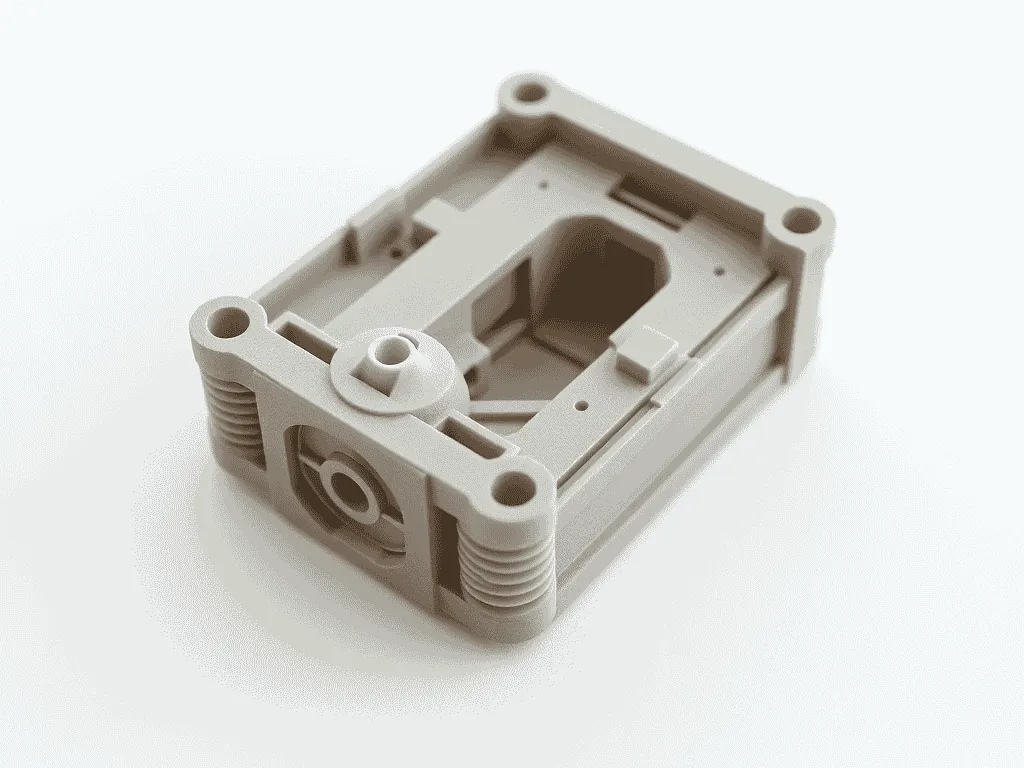
PEEK medical parts reward a machine shop that respects the material and punish one that treats it like aluminium. This case study covers a programme of more than 10,000 machined PEEK components for a medical device manufacturer in Germany, delivered on time with full ISO 13485 traceability, order after order. It explains how medical grade PEEK behaves under the cutter, how the traceability chain was built, and why consistency across repeat orders is the real test.
Project at a glance
- Industry
- Medical device manufacturing
- Client
- Quality manager, Germany
- Parts
- Machined PEEK components
- Volume
- 10,000+ parts
- Quality system
- ISO 13485
- Traceability
- Full, from material lot to shipment
- Delivery
- On time
- Relationship
- Repeat orders
- 10,000+PEEK components machined and delivered
- ISO 13485full lot traceability on every order
- On timedeliveries met across the programme
- Repeatablequality consistent order after order
“10,000+ PEEK medical parts with full ISO 13485 traceability, delivered on time. The quality is consistent order after order. Best CNC machining company in China we’ve worked with.”
Quality Manager, Medical device manufacturer, Germany
Why are PEEK medical parts harder to machine than they look?
Polyetheretherketone cuts easily. A sharp tool goes through it without complaint, and a first part often looks perfect. The problems show up later: in the tenth part, in the part measured the next morning, or in the second order that does not quite match the first. Four properties of PEEK cause almost all of them.
It moves with temperature. Below its glass transition of about 143 °C, unfilled PEEK expands at roughly 45 to 55 µm per metre per kelvin. That is four to five times steel. A part measured warm from the machine and measured again an hour later can be two different parts.
It holds heat at the cut. Thermal conductivity is only about 0.25 W/m·K, so frictional heat stays in the surface. A dull or rubbing tool softens the surface layer, smears it and leaves fuzz and burrs.
Extruded stock carries residual stress. Rod and plate are cooled from the outside in. Remove a lot of material from one side and the part bows as that stress relaxes, sometimes hours after it left the machine.
It is easy to contaminate. A medical part’s documented material condition assumes nothing was added. The wrong coolant, metal fines from a shared machine or handling oils can all compromise that condition.
What the client needed from a PEEK supplier
The client was the quality manager of a German medical device manufacturer. The request was not only for good parts. It was for parts that could be defended in an audit: every one of the 10,000+ PEEK components traceable to its material lot and inspection record, and every order matching the last. Client names, part numbers and device details are not published.
| Requirement | Why it matters for a device maker | How it was met |
|---|---|---|
| Medical grade PEEK with lot documentation | The device file references a specific material and its biocompatibility evidence | Stock bought to the client’s specification, material lot recorded on receipt |
| ISO 13485 traceability | Any field issue must be traceable to the lots affected | Lot records from material lot to shipment, reviewed before release |
| Consistency between orders | A change in fit or finish triggers investigation on the client side | Locked programme revisions, retained fixtures, first-off approval per order |
| No contamination of the material | Additives or residues can void material evidence | Controlled coolant use, dedicated tooling, cleaning before packing |
| On-time delivery | Device production lines run to schedule | Orders planned against capacity at the quote stage |
Medical grade PEEK: what the grade means for the machine shop
“Medical grade PEEK” is not one material. Resin makers sell PEEK in grades defined by how long the finished device may contact the body, and the device maker chooses the grade in its design. What matters to the machine shop is that the grade arrives with documentation, and that machining does nothing to change the condition that documentation describes.
Contact duration categories come from ISO 10993-1, the framework device makers use for biological evaluation. Implantable PEEK polymers are also covered by ASTM F2026.
| PEEK grade family | Typical use | Documentation you should expect | Machining note |
|---|---|---|---|
| Industrial PEEK | Machine components, not medical | Standard material certificate | Must not be substituted into a medical programme |
| Medical grade PEEK, limited or prolonged contact | Instrument parts, device housings, fluid path components | Lot certificate plus the resin maker’s biocompatibility data | Same machining route, full lot traceability |
| Implant grade PEEK, long-term contact | Spinal cages, implant components | Lot certificate plus master file access for the device maker | Strictest contamination control and cleaning |
| Carbon-fibre reinforced PEEK | High-stiffness implant and instrument parts | As above, per the reinforced grade | Abrasive: diamond-tipped tools, different finish behaviour |
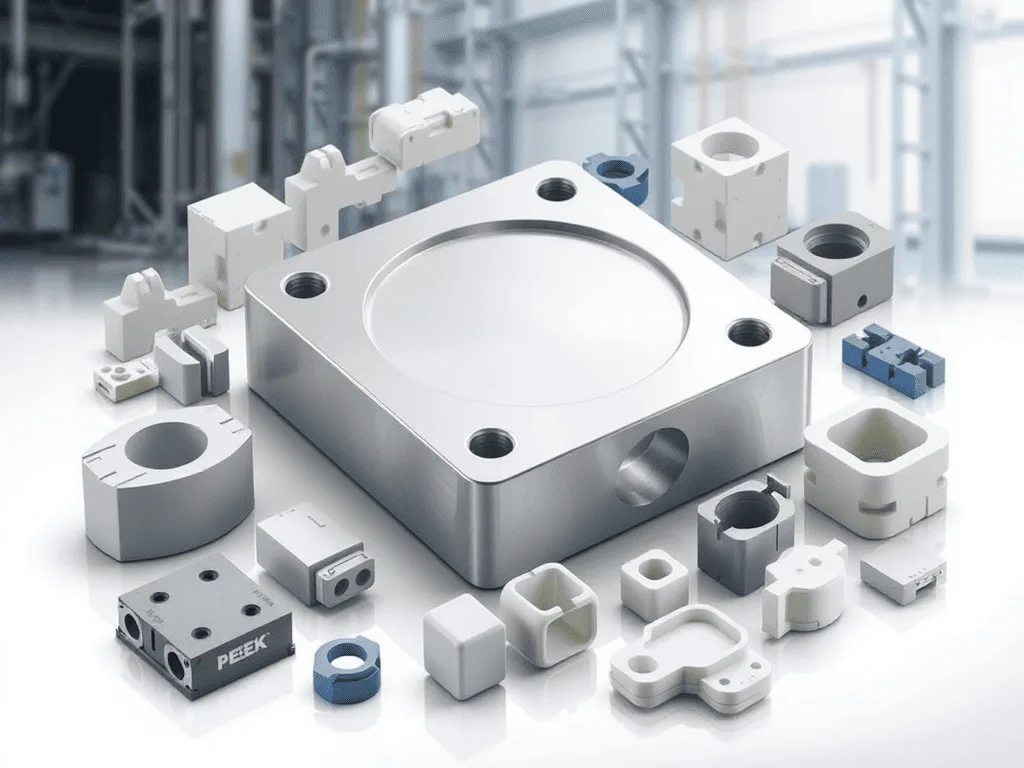
How we machine PEEK medical parts
The route below is how MW+ runs PEEK components for medical programmes. It follows the same logic as our CNC milling services for metals, with the changes PEEK demands at every step: sharper tools, lighter finishing passes, stress control and cleanliness.
| Step | Operation | Why it is there |
|---|---|---|
| 1 | Receive stock, verify certificate, log material lot | Opens the traceability chain |
| 2 | Stress-relief anneal where the stock maker or drawing calls for it | Reduces distortion when material is removed unevenly |
| 3 | Rough machining, leaving an even finishing allowance | Releases most of the stress before final geometry is cut |
| 4 | Rest period to let the part stabilise | Lets movement happen before, not after, finishing |
| 5 | Finish machining with sharp, polished-flute tools | Clean shear instead of rubbing, minimal burrs and fuzz |
| 6 | Deburr and inspect edges under magnification | PEEK burrs are flexible and easy to miss by eye |
| 7 | Clean, dry and pack to the client’s specification | Removes machining residues before the parts leave |
Tooling and cutting conditions
PEEK wants a tool that shears rather than pushes. Sharp, uncoated or polished carbide with a positive rake works well on unfilled grades. Carbon-fibre reinforced PEEK is abrasive and wears carbide quickly, so diamond-tipped tooling is the usual answer. Heat is managed with light finishing passes and chip evacuation rather than by flooding the part, and any coolant used on a medical programme is approved for that programme before the first cut.
Keeping the material clean
Metal fines are the contamination that surprises people. A machine that cut brass in the morning can leave particles in the enclosure that embed in soft PEEK in the afternoon. On medical work, tools are dedicated to the programme and the machine is cleaned down before a PEEK lot starts.
Worked example: why PEEK has to be measured at 20 °C
Dimensions on a drawing are defined at 20 °C by ISO 1. With a stiff metal, a few degrees rarely matters. With PEEK it can decide a batch.
Take a 50mm feature on a PEEK component, with a coefficient of thermal expansion of 47 µm/m·K, measured at 25 °C instead of 20 °C.
- PEEK: 50mm × 47 µm/m·K × 5 K = 11.8 µm of growth.
- Aluminium 6061 at 23.6 µm/m·K: 5.9 µm.
- Stainless steel 316L at about 16 µm/m·K: 4.0 µm.
A ±0.005mm tolerance is a 10 µm band. On the PEEK part, a 5 °C temperature error alone is larger than the whole band. That is why PEEK medical parts are measured after they have soaked to room temperature in the inspection area, never straight off the machine.
| Property (unfilled PEEK, typical) | Value | What it means for machining |
|---|---|---|
| Glass transition temperature | about 143 °C | Local heat at a dull tool can soften the surface |
| Melting point | about 343 °C | Well above machining temperatures when tools are sharp |
| Thermal expansion below Tg | about 45–55 µm/m·K | Measure at 20 °C after a soak |
| Thermal conductivity | about 0.25 W/m·K | Heat stays at the cut; use light finishing passes |
| Tensile strength | about 100 MPa | Thin walls deflect under clamping and cutting force |
| Water absorption, 24 h | low, well under 0.5% | Moisture growth is small compared with temperature |
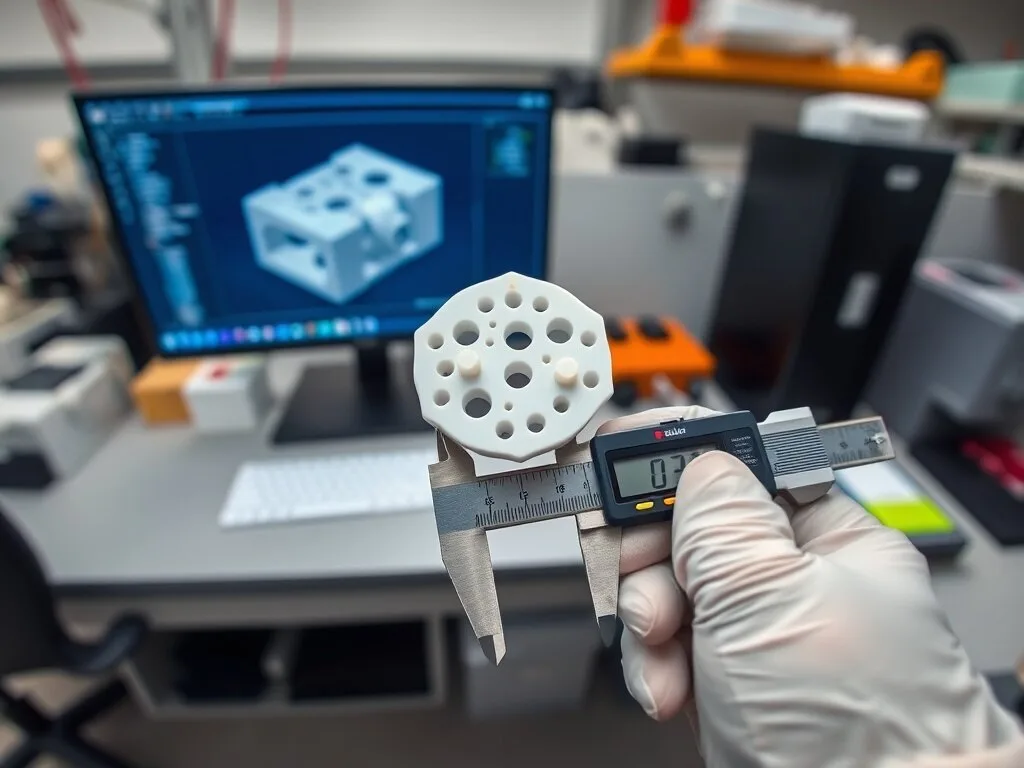
ISO 13485 traceability across 10,000+ PEEK components
Traceability on a medical programme is a chain, and the chain is only as good as its weakest link. For these PEEK components, every link was written down and reviewed before release, under the same CNC machining quality control system that governs all MW+ production.
ISO 13485:2016 sets the requirement in clause 7.5.8 for identification and clause 7.5.9 for traceability. In practice, ISO 13485 traceability means being able to answer one question quickly: if a problem is found in the field, which parts, from which material lot, made on which day, are affected?
| Link in the chain | Recorded | Where it lives |
|---|---|---|
| Material lot | Resin maker’s lot, stock supplier’s lot, certificate | Receiving record |
| Machining lot | Machine, programme revision, tools, dates, operator | Traveller |
| Inspection lot | First-off results, in-process checks, final sample results | Inspection report |
| Cleaning and packing | Method, date, packer, label contents | Packing record |
| Shipment | Quantities per lot, certificate of conformance | Release record |
Our wider approach to inspection standards for machined parts uses the same structure. The medical version simply allows no gaps.
How consistency was held order after order
The client’s comment about consistency is the most important line in the quote. First orders are easy to get right, because everyone is watching. The fifth order is where suppliers drift. These are the controls that stop it.
- Locked programmes. The approved CNC programme revision is recorded, and any change goes through change control and is notified to the client before it is used.
- Retained fixtures. Workholding is kept for the programme rather than rebuilt for each order, so the part sits the same way every time.
- First-off approval on every order. The first parts of each order are fully inspected against the drawing before the run continues, as in a first article inspection.
- Statistical control on critical features. Controlled characteristics are charted through the run, with a Cpk target of 1.67 or better.
- Sampling to a written plan. Attribute checks follow an agreed sampling plan based on ISO 2859-1, and the plan is the same on every order.
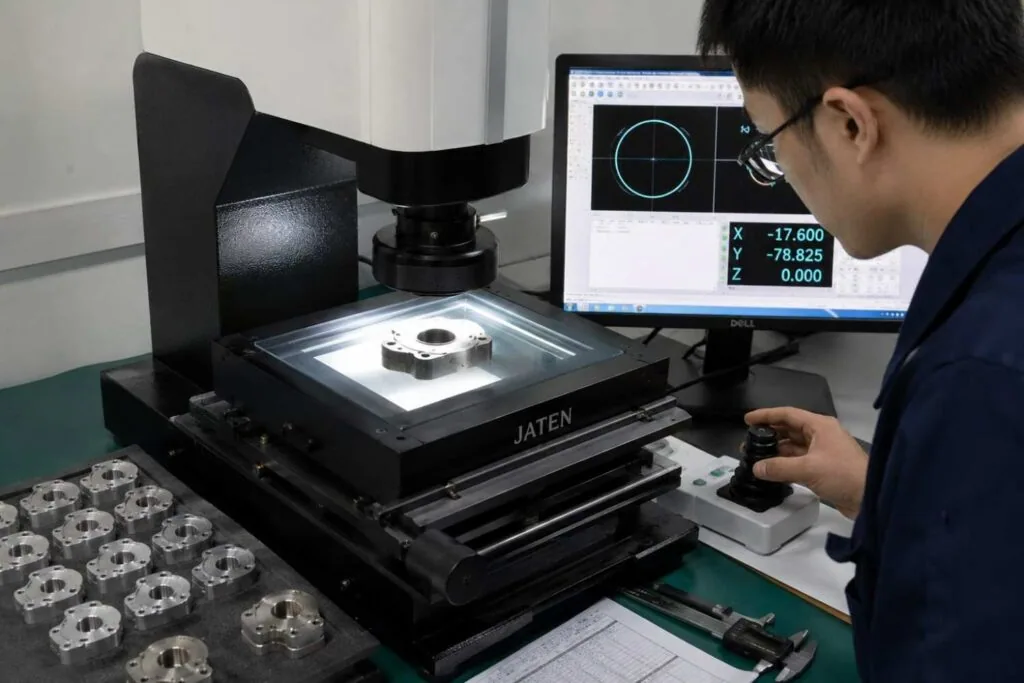
The result
More than 10,000 PEEK medical parts were delivered, with full ISO 13485 traceability and on time. The client’s quality manager described the quality as consistent order after order, which, for a medical supplier, is the result that matters most. The claims on this page are limited to what the client stated.
About this case study. The client quote is published on our homepage as given. Client name, part numbers and device details are not published. The process route and controls describe how MW+ runs PEEK components for medical programmes.
Lessons for anyone sourcing PEEK components
- Name the grade and the resin maker on the drawing. “PEEK” alone invites substitution. A medical drawing should name the exact grade.
- Tolerance PEEK for what PEEK can do. ±0.01mm is realistic on most small features. Ask for ±0.005mm only where the function needs it, and expect temperature-controlled measurement to be part of the price.
- Ask how distortion is controlled. A supplier who machines PEEK in one continuous operation from raw stock to final size will see parts move later.
- Ask to see the traceability chain. A good supplier can show you a sample lot record before you order.
- Plan repeat orders as a programme. Telling the supplier the annual volume lets them retain fixtures and lock programmes, which is where consistency comes from.
For the cost side of the same material, see our guide to PEEK CNC machining cost.
When CNC machining is the wrong route for PEEK medical parts
Machining is the right answer for most PEEK medical parts at prototype and medium volumes. It stops being the right answer in a few cases.
- Very high volumes of a simple shape. Once annual quantities reach the tens of thousands for a geometry that moulds well, injection moulding usually wins on unit cost, even with the high tool temperatures PEEK needs.
- Features below what the material can hold. Asking for ±0.001mm on a PEEK feature is asking for a number the material will not keep once it leaves the inspection room.
- Very thin walls on large parts. PEEK walls under about 0.5mm on a large part tend to move after machining. A small design change is often cheaper than fighting the material.
Frequently asked questions
Can you machine implant grade PEEK?
Yes. We machine the grade your drawing specifies, with the stock supplied under the resin maker’s documentation and the material lot recorded on receipt. Whether a finished part is suitable for implantation is established by your own design and validation, so we work to your specification and supply the records your file needs.
What tolerance can you hold on PEEK medical parts?
±0.01mm is our realistic general figure on small PEEK features, with ±0.005mm on selected features when the part is measured at 20 °C after a soak. Large parts and thin walls need looser tolerances, and we will say where in the DFM feedback.
Do you use coolant when machining medical grade PEEK?
Only where it is approved for the programme. Many PEEK operations run with air or minimal cooling, relying on sharp tools and light finishing passes. Where coolant is needed, its type is agreed with you and recorded, and parts are cleaned before packing.
Can you trace parts back to the resin lot?
Yes. The stock certificate carries the resin maker’s lot, and we record it against the machining lot. Each packed bag is labelled with a lot number that links back through inspection and machining to that material lot.
Do you anneal PEEK before machining?
When the stock maker recommends it or the drawing calls for it, yes. Stress-relief annealing, combined with rough and finish machining separated by a rest period, is how we keep PEEK parts from moving after they are finished.
Can you machine carbon-fibre reinforced PEEK?
Yes. It is abrasive, so it runs with diamond-tipped tooling and different cutting conditions. Tell us the grade at quote stage, because tooling cost and cycle time differ from unfilled PEEK.
How do you keep repeat orders consistent?
Locked programme revisions, fixtures retained for the programme, first-off approval on every order and statistical control on critical features. Any change to the process is notified to you before it is used.
What do you need to quote PEEK medical parts?
A STEP file, a dimensioned drawing, the exact PEEK grade, the quantity per order and per year, and your documentation and packing requirements. An engineer returns a quote and DFM feedback within 24 hours.
Sourcing PEEK components for a medical device?
MW+ is a precision CNC machining company in Shenzhen that machines polymer and metal CNC precision parts under ISO 13485, ISO 9001:2015, AS9100D and IATF 16949. For the bigger picture of what a medical machining supplier should provide, read our guide to medical device CNC machining, and for a titanium example, see the bone screw machining case study.
Send the drawing and the PEEK grade. You will get a price, a lead time and written DFM feedback within 24 hours, including where the tolerances on your PEEK medical parts can safely be opened up.