







Complex CNC Parts: How Geometry Shapes Production Costs
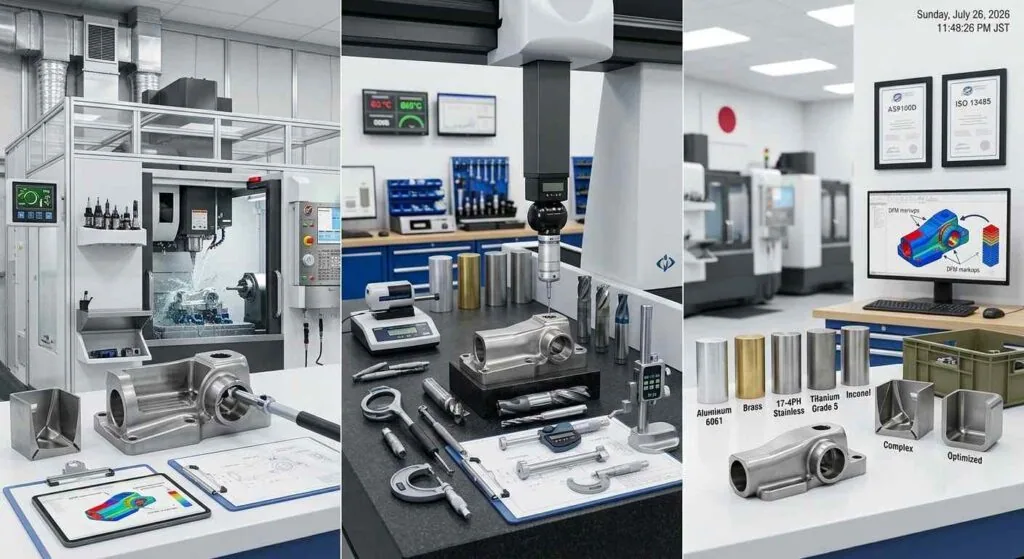
Geometry drives the cost of complex CNC parts through four physical mechanisms, not through a vague notion of difficulty. Every feature on a model either lets the shop use a big, stiff tool at a high feed rate, or forces a small tool, a long reach, a light cut or an extra setup. Price follows […]
Tight Tolerance Machining: Budgeting for ±0.005 mm
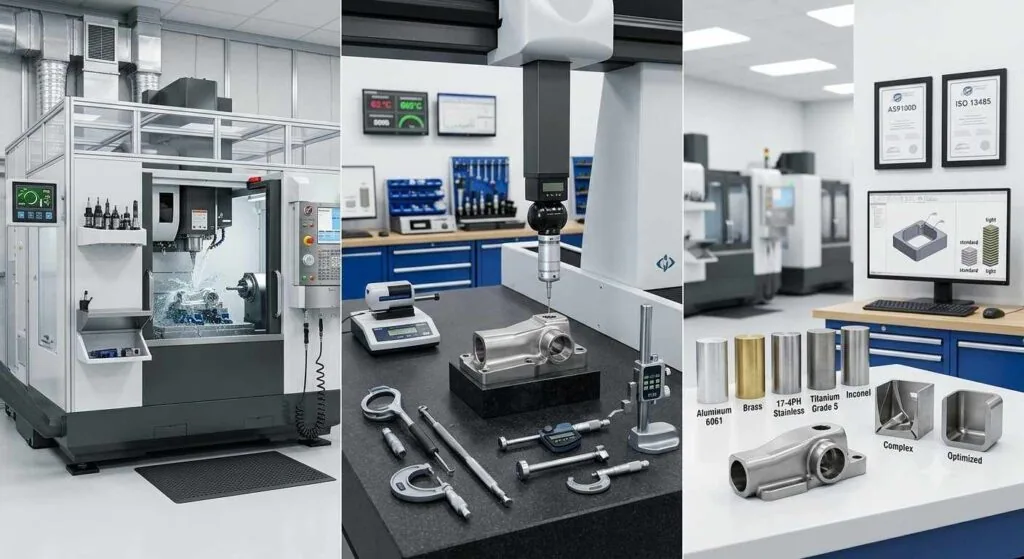
A ±0.005 mm callout does not simply make a part “more accurate”. It changes the tight-tolerance budget of the part: slower finishing passes, per-part inspection instead of sampling, a higher scrap allowance, and a longer first-article approval before the batch runs. This guide is about budgeting for that, not about how tight tolerances are achieved. […]
Precision Parts Procurement: Specifying Tolerance in an RFQ
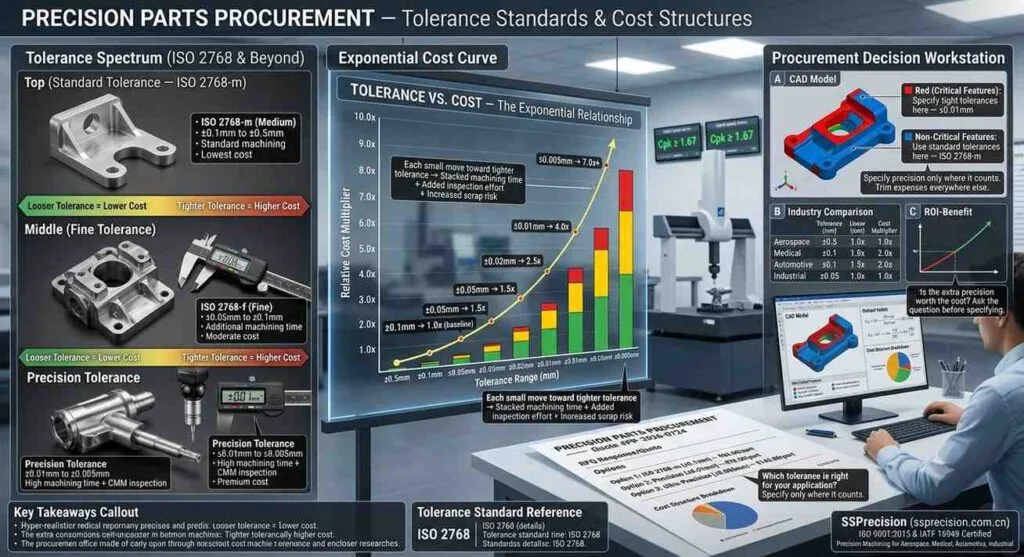
Tolerance moves a precision machining quote more than any other line on the drawing, and it is the line a buyer usually has least visibility into. A ±0.1 mm callout and a ±0.005 mm callout on the same feature separate a part that runs on a standard machining centre in one setup from one needing […]
Custom CNC Part Costs: What Actually Drives Machine Shop Rates?
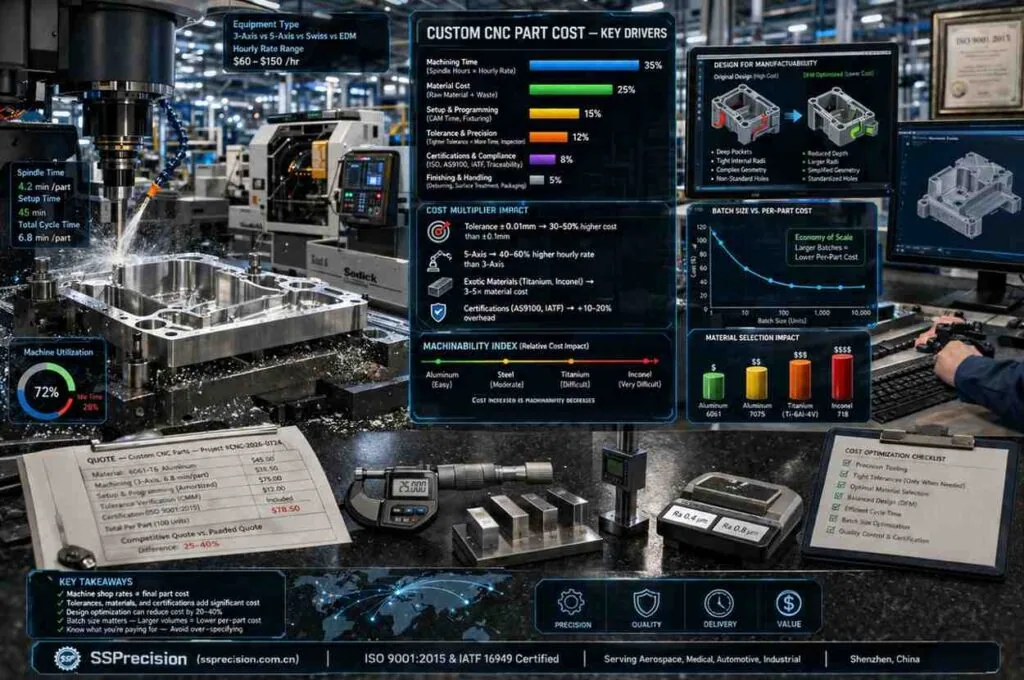
A machine shop rate looks like one number, but it is really a stack of costs the supplier has to recover for every hour a machine is running. Understanding what is in that stack tells you which parts of a quote you can move with a design change and which parts you cannot move at […]
On-Demand CNC Machining in China: How to Order Parts
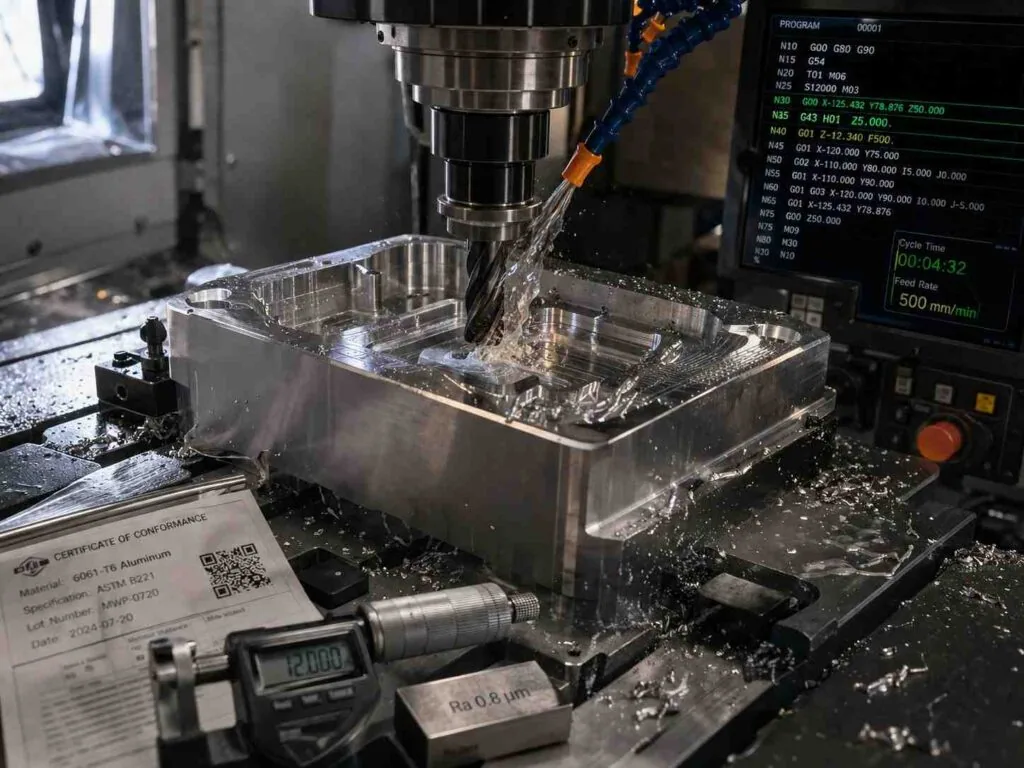
On-demand CNC machining is a sourcing model, not a machine type: you send a CAD file, you get a price and a date back quickly, and parts are cut against that date without a tooling commitment or a minimum order. It exists because most engineering programmes do not know their exact quantity until late, and […]
Ultra Precision CNC Machining: What It Takes to Hold ±0.001mm
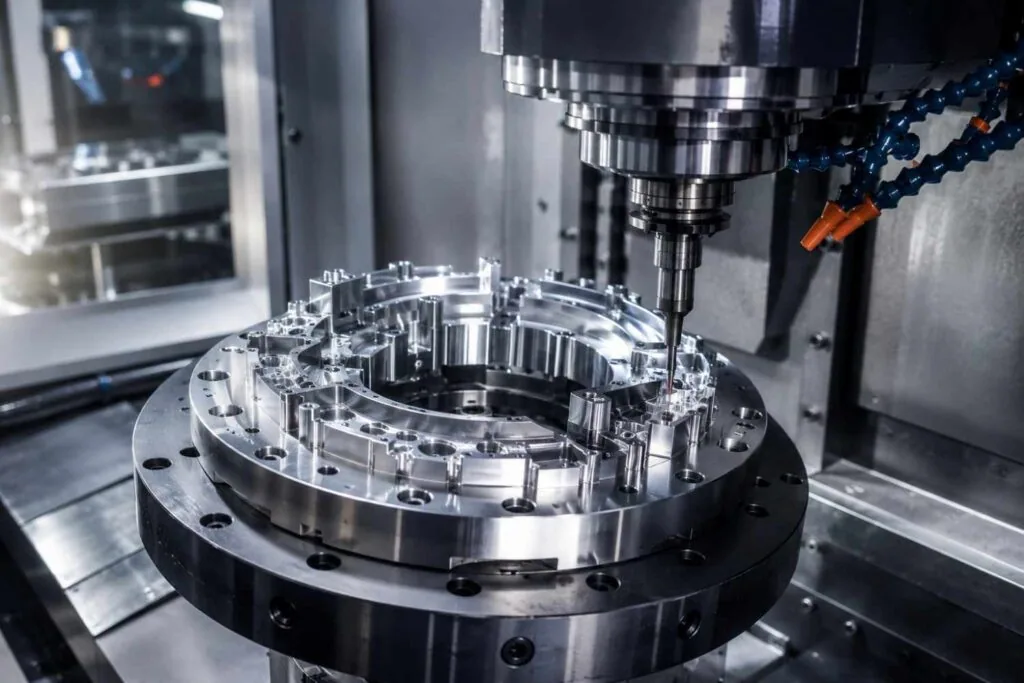
In ultra precision CNC machining, a ±0.001mm tolerance band is not a programming setting. It is a set of physical conditions the shop floor has to hold — temperature, clamping force, tool engagement, measurement traceability — and any one of them going unmanaged is enough to lose the tolerance regardless of how good the machine […]
CNC Milling vs. Turning: Start From Your Part Geometry
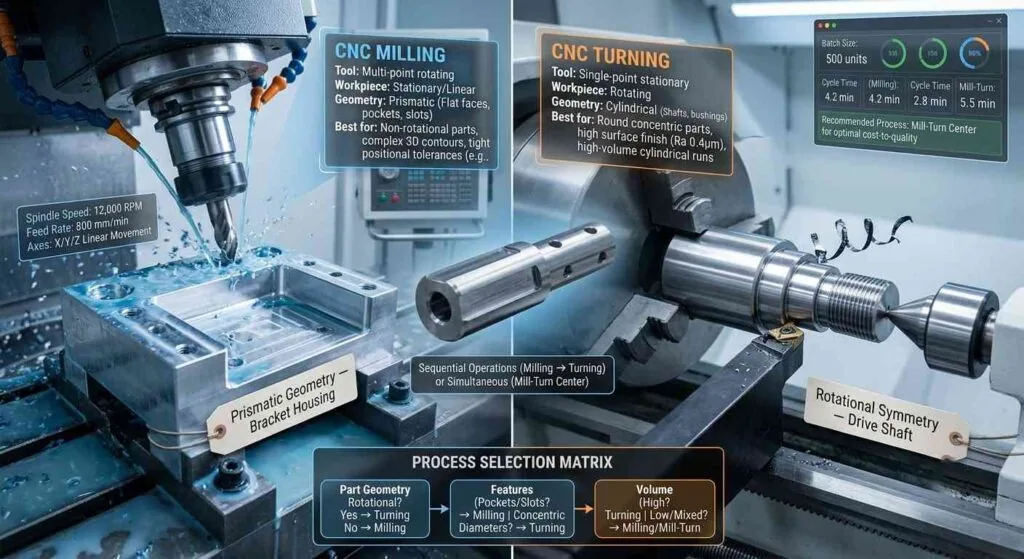
Most comparisons of CNC milling vs turning start with the machines. This one starts with your part, because the machine is a conclusion, not a choice. Look at where the features sit relative to each other, and the process usually declares itself before anyone opens a quoting spreadsheet. What follows is a design-led route to […]
5-Axis vs. 3-Axis CNC: A Decision Guide for Your Part
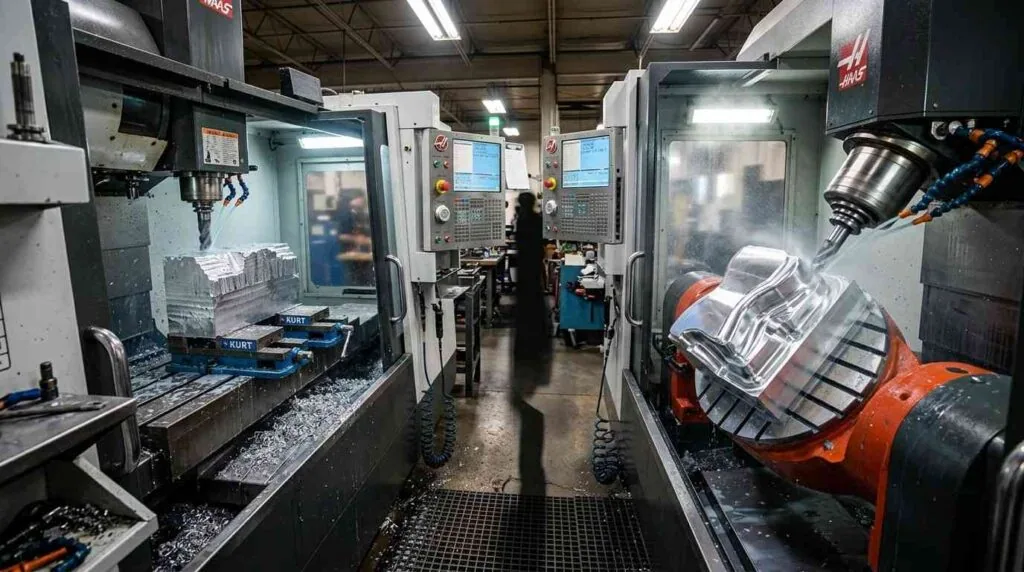
The choice between 3-axis and 5-axis CNC machining is not a question about which machine is better. It is a question about one specific part, and it can usually be settled in a few minutes by counting faces, looking for compound angles, and working out how many times the part would have to be re-clamped. […]
Forged Wheel Face Machining for OEM Wheel Programmes
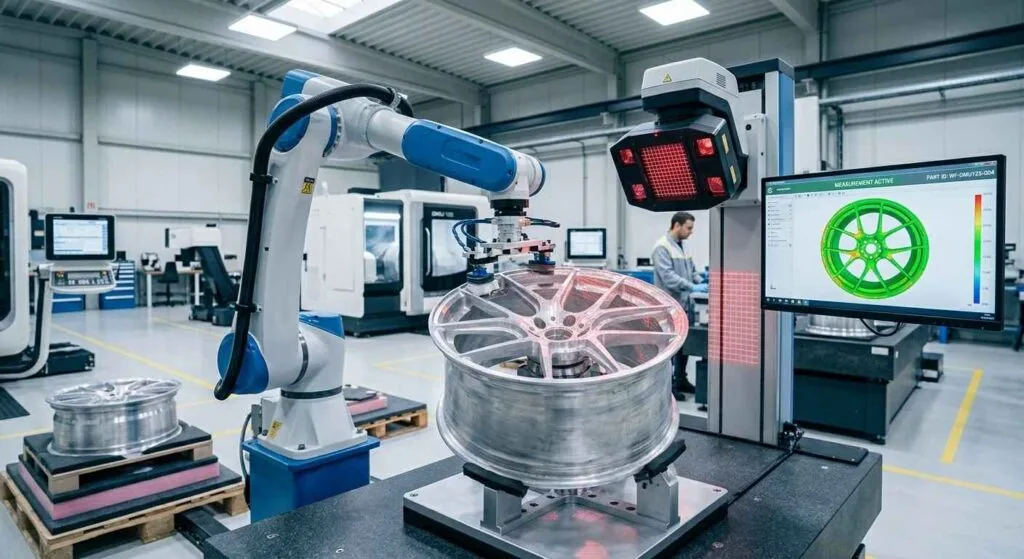
A custom forged wheel face is the visible spoke-and-lip surface of a wheel, cut by CNC machining from a forged aluminum blank rather than poured into a casting mold. The forge produces a dense blank with aligned grain flow; the CNC stage produces every dimension the vehicle depends on — spoke channels, face profile, lip […]
Robotics Powertrain Components: AGV and Robot Drive Parts
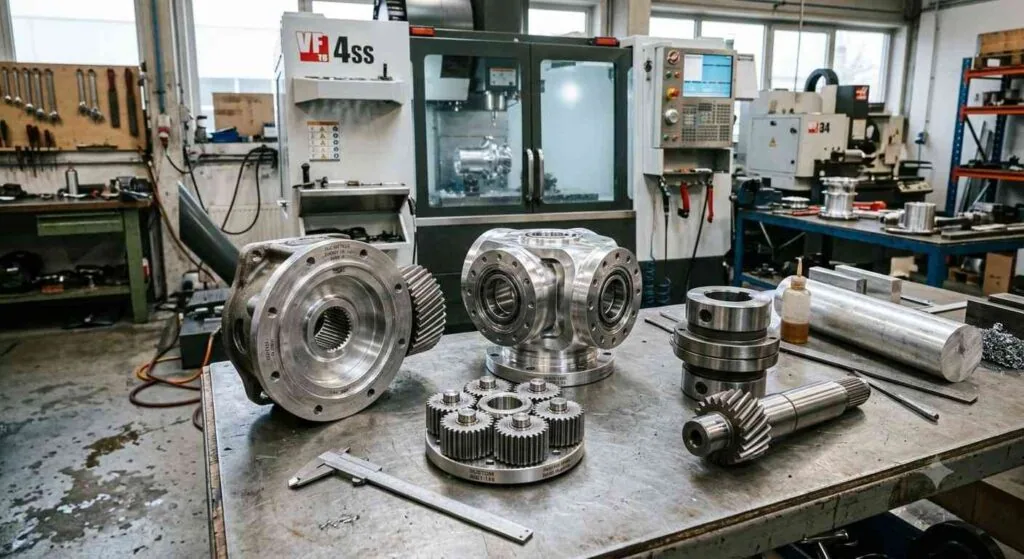
An AGV or industrial robot powertrain is the chain of machined parts that turns motor torque into repeatable motion: gear housings, motor mounts, drive shafts, bearing seats, wheel hubs and reducer interfaces. These robotics powertrain components sit inside the load and motion path, so a bore in the wrong place becomes backlash, an oversized bearing […]