A purchase order buys parts. A contract manufacturing agreement buys capacity, a fixed specification and a known price for a period of time. The difference only matters when something goes wrong — a material grade goes short, a machine goes down, demand doubles — and at that point the agreement is the only thing standing between your line and a queue.
This guide is for the procurement engineer who has been told to “put the custom machine parts under contract” and now has to decide what the document should actually say. It covers what belongs in the agreement, how to evaluate a supplier for a multi-year commitment, and the situations where signing one is the wrong move. For the machine base and process range behind these commitments, see the MW+ manufacturing capabilities page.
Key takeaways
- A contract manufacturing agreement is a forward commitment to volume, specification and price. It does not make parts arrive faster on any single order — it makes the arrival date predictable across many of them.
- Lock the specification, not only the price. Name the tolerance class in the agreement: general machining to ±0.01mm under ISO 2768-m, precision features at ±0.005mm, critical features at ±0.001mm, held at a process capability of Cpk ≥1.67.
- Write the certification scope into the contract, not the supplier brochure. MW+ operates to ISO 9001:2015, AS9100D, ISO 13485, IATF 16949 and NADCAP.
- A certificate of conformance, a CMM inspection report and material certificates ship with every MW+ order. First article inspection to AS9102 and PPAP Level 3 are on request and quoted per program — name them in the agreement, not on a later purchase order.
- Tooling ownership, fixture ownership and rights to the CAM program decide whether you can ever move the part. Settle all three at signature, because they are unwinnable arguments later.
- MW+ has no minimum order quantity and runs to 1,000,000+ units. You do not need an agreement to buy parts; you need one to reserve capacity, freeze a specification and stabilize price.
- What is a contract manufacturing agreement?
- Spot buying versus a contract agreement
- What should a precision machining agreement actually contain?
- How do blanket orders and staggered releases work?
- Quality and documentation terms that belong in the contract
- How do you evaluate a supplier for a multi-year commitment?
- The clauses that decide what happens when something goes wrong
- When a contract agreement is the wrong choice
- Frequently asked questions
What is a contract manufacturing agreement?
A contract manufacturing agreement is a forward commercial agreement in which a manufacturer commits to produce defined parts, to a frozen specification, at an agreed price, across an agreed period, in exchange for the buyer committing to a volume. It replaces a series of independent quotes and purchase orders with one negotiated frame, so price, capacity and quality terms stop being re-decided every time a part is needed.
The word “contract” does the least work in that sentence. What actually changes your risk position is the specification freeze and the capacity reservation. A price that is locked but a drawing that keeps moving gives you nothing, because every revision reopens the quote.
The three things an agreement is buying
- Capacity. Named machine time, reserved ahead of demand, so your job is not competing with everyone else’s on the week you need it.
- Specification stability. One approved first article, one set of fixtures, one CAM program, run repeatedly. This is where quality consistency actually comes from.
- Price visibility. A known unit price for a known period, usually with a defined mechanism for what happens if raw material moves outside a band.
Spot buying versus a contract agreement
Spot buying is not a mistake — it is the correct model for genuinely irregular demand. The comparison below is to help you decide which model each part number belongs in, rather than to push everything under contract.
| Dimension | Spot buying, order by order | Contract manufacturing agreement |
|---|---|---|
| Price | Re-quoted each time; moves with material and machine loading | Fixed for the term, usually with a material adjustment mechanism |
| Capacity | Competes with all other work in the queue | Reserved against a forecast |
| Specification | Re-read and re-interpreted each order | Frozen at first article approval |
| Setup and fixturing | Re-charged, or re-created, on each run | Amortized across the term; fixtures kept and maintained |
| Inventory | Buyer carries safety stock to cover variance | Scheduled releases reduce the stock you must hold |
| Best suited to | One-off parts, prototypes, unstable designs | Repeating demand on a frozen, qualified drawing |
Note the row that matters most: setup and fixturing. Repeat spot orders quietly pay for the same programming and fixture work again and again, and that is usually the largest recoverable cost in a contract negotiation. It is a stronger argument than volume discounting, and it is verifiable on the quotes you already hold. For the process range those setups cover, see MW+ CNC machining services.
What should a precision machining agreement actually contain?
A precision machining agreement should contain the frozen drawing revision, the tolerance class and process capability, the documentation package, the release and forecast mechanism, the material price adjustment rule, tooling and fixture ownership, capacity flexibility limits, and the exit terms. Anything left to “as per standard practice” becomes an argument at the worst possible moment.
| Clause | What to specify | Red flag in the supplier’s draft |
|---|---|---|
| Specification freeze | Drawing number and revision, plus who pays for a change and how it is approved | “Latest revision” with no change-control process |
| Tolerance and capability | Class per feature, and the required Cpk, stated numerically | “Precision tolerances” with no figure |
| Documentation package | Which documents ship with every order and which are on request | Documents named only in a marketing annex |
| Release mechanism | Forecast horizon, firm window, and how much of the forecast is binding | Annual volume committed with no release schedule |
| Material price adjustment | Named index, variance band, review frequency, adjustment in both directions | Adjustment that moves up but never down |
| Tooling and fixtures | Who pays, who owns, where they are stored, what happens on exit | Silence — the default is that you cannot take them |
| Capacity flexibility | Agreed surge percentage above forecast and the notice required | Flexibility promised verbally, absent from the text |
| Exit and transfer | Notice period, last-time-buy rights, transfer of the CAM program | No transition obligation of any kind |
Tooling and exit are the two clauses buyers most often skip and most often regret. If the supplier owns the fixtures and the proven CAM program, moving the part means paying for first article qualification again somewhere else, and the incumbent knows it.
How do blanket orders and staggered releases work?
A blanket order commits an annual quantity at an agreed price, then draws it down in scheduled releases rather than one shipment. The buyer gets the volume price without warehousing a year of stock, and the supplier gets a forecast it can schedule material and machine time against. The release schedule, not the headline quantity, is what actually protects the delivery date.
Three parameters do the work. The forecast horizon is how far ahead you show demand. The firm window is the period inside which your quantity cannot change and the supplier commits material. The flex band is how far a release may move without renegotiation. Set the firm window against real production lead time — for volume machine parts manufacturing at MW+ that window is 10 to 15 business days plus your transit mode, so a firm window shorter than that is decorative. How that production window is built up phase by phase is set out in the comparison of prototype and production CNC machining lead times.
Consignment and Kanban replenishment
A Kanban arrangement replaces the release schedule with stock thresholds: when your on-hand quantity falls below an agreed minimum, the supplier machines and ships the next batch without a new order. It works well on stable, high-turn parts and badly on parts whose demand is lumpy, because the trigger fires late and the replenishment still takes a full production cycle. Do not put a part on Kanban until its demand history is boring.
Quality and documentation terms that belong in the contract
Quality clauses fail when they name a standard without naming what is delivered under it. “Supplier shall maintain ISO 9001” tells you nothing about whether a CMM report arrives with the shipment. Specify the artefact, its frequency, and the acceptance route, and the clause becomes enforceable.
| Requirement | Document or evidence | When it applies |
|---|---|---|
| Conformance to the frozen drawing | Certificate of conformance | Every MW+ order |
| Dimensional evidence | CMM inspection report | Every MW+ order |
| Material identity and heat | Material certificates | Every MW+ order |
| New part or process qualification | First article inspection to AS9102 | On request, quoted per program |
| Automotive production approval | PPAP Level 3 | On request, quoted per program |
| Quality management system scope | ISO 9001:2015, AS9100D, ISO 13485, IATF 16949, NADCAP certificates | Named in the agreement, with certificate expiry dates tracked |
Add one more line most agreements lack: what happens to a nonconforming lot. Name the disposition route, the containment obligation and who pays for sorting. The inspection regime behind these documents is described on the MW+ quality assurance page.
How do you evaluate a supplier for a multi-year commitment?
Evaluate a long-term machining supplier on redundancy, metrology, material access, engineering depth and financial stability — in that order. A supplier who can machine your part once has proved almost nothing about a three-year commitment. What you are underwriting is their ability to keep doing it when a spindle fails, an operator leaves or a grade goes short.
| What to ask | Good answer | Red flag |
|---|---|---|
| How many machines could run my part? | A named count of interchangeable centres, with the program proven on more than one | “Our best machine” — a single point of failure |
| How is measurement traceable? | CMM with a documented calibration chain and stated inspection environment | Hand gauges and a promise |
| Where does the material come from? | Named stocked grades, mill certificates supplied, alternates identified in advance | Material sourced per order, no alternates considered |
| Who reviews the design? | Engineers who return DFM comments before the agreement is signed | Quote returned with no technical questions at all |
| What is the surge capability? | A percentage above forecast, in writing, with a notice period | “We will always find a way” |
| What happens if we exit? | Defined notice, last-time-buy, tooling and program transfer | No answer, or an answer that only appears verbally |
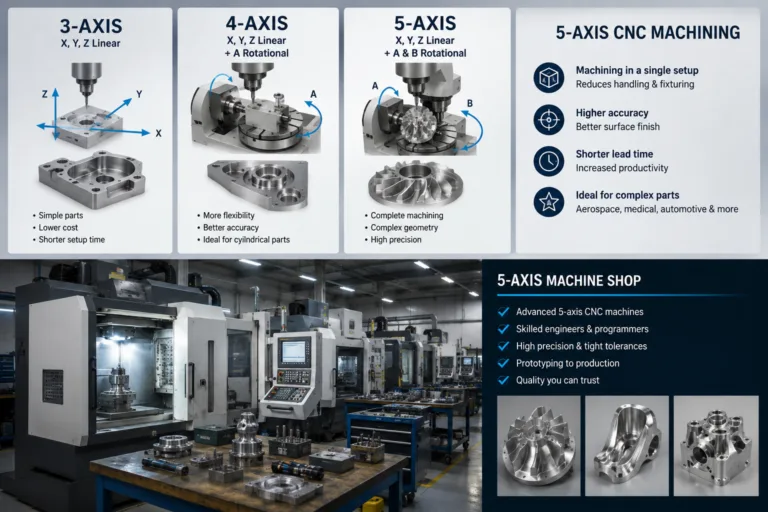
Redundancy is the single most predictive item. A shop with overlapping 3-axis, 4-axis and 5-axis capacity can move your job when a machine goes down; a shop with one suitable centre cannot, whatever the contract says. MW+ runs 60+ machining centres from a 15,000 m² facility in Guangming, Shenzhen, founded in 2015, with 120+ engineering and quality professionals — see MW+ multi-axis machining and about MW+. The record behind that capacity is 1 million+ parts delivered to customers in 50+ countries at 99% on-time delivery. The audit questions that belong before any multi-year commitment are set out in the guide to choosing a CNC machining supplier in China.
The clauses that decide what happens when something goes wrong
Most of an agreement describes the good case. The clauses below describe the bad one, and they are the reason the document exists at all. Each should name a trigger, an obligation and a time limit.
Material price movement
Name a published index for the alloy family, a variance band, and a review frequency. The adjustment must run in both directions; a clause that only rises is a price escalator with a technical name. Where a grade has no clean index, agree instead on a documented pass-through of the mill invoice.
Capacity surge and shortfall
State the percentage above forecast the supplier will absorb and the notice you must give. State also what happens if you under-consume: an unstated shortfall obligation is where most contract disputes actually begin, because the supplier has bought material against your forecast.
Continuity of supply
Ask for a named alternate machine group inside the same facility, and agree whether a safety stock is held and by whom. Dual sourcing across two suppliers is stronger still, but it doubles qualification cost, so it is usually reserved for parts whose absence stops a line.
When a contract agreement is the wrong choice
A contract agreement is the wrong choice whenever the thing you would be freezing is not yet stable. Locking a price around a moving drawing, an unproven design or a demand pattern nobody can forecast transfers risk to you, not away from you, because you now owe volume against a specification that will change.
| Situation | Why the agreement hurts | Do this instead |
|---|---|---|
| Design still in revision | Every change reopens the price and may scrap dedicated fixtures | Buy spot until the drawing is frozen and the first article is approved |
| Demand you cannot forecast | You commit volume you may not consume, and owe the material either way | Keep the part on spot, or agree a forecast-only arrangement with no commitment |
| Single low-value part number | Negotiation and administration cost more than the savings | Bundle it into an agreement covering a family of parts, or leave it alone |
| You are testing a new supplier | A multi-year term removes your leverage before performance is proven | Run a qualification period on real orders first, then contract |
| Rapidly falling material market | A fixed price without a downward mechanism locks you above market | Insist on a two-directional index clause, or shorten the term |
| Prototype and development work | The value is speed and iteration, which a frozen specification removes | Use CNC prototyping on a per-order basis |
There is also a portfolio judgement. Putting every part under contract removes the market signal you get from re-quoting, and after two years nobody remembers what the part should cost. Keep a few representative parts on spot deliberately, as a price reference.
Frequently asked questions
What term length should a precision machining agreement run for?
Match the term to how long the specification will stay frozen, not to how long the finance team wants price certainty. A part on a mature platform can carry a multi-year term; a part on a product still in its first year of production usually cannot. Where the two disagree, take the shorter term and add a renewal option rather than an exit fight.
Do I need a minimum volume to put parts under agreement?
MW+ has no minimum order quantity, so volume is not a gate on buying. What volume changes is whether an agreement is worth the administrative effort: below a certain annual spend, the negotiation and governance cost more than the price stability is worth. Bundling several part numbers into one agreement is the usual way past that threshold.
Who should own the fixtures and the CAM program?
If you pay for tooling, say in the agreement that you own it, where it is stored, and that it is released on request. The CAM program is the harder question: suppliers regard it as their process knowledge, and many will not transfer it. Settle both at signature, because after production starts the incumbent holds every card.
How do I stop a locked price from drifting away from the market?
Use a material price adjustment clause tied to a published index for the alloy family, with a variance band and a stated review frequency, adjusting in both directions. Keep a small number of comparable parts on spot purchase as a live price reference, and schedule a formal benchmark at each renewal rather than only at exit.
Can a supplier absorb a sudden increase in demand under contract?
Only to the extent the agreement says so. Capacity flexibility must be written as a percentage above forecast with a notice period, and it depends on the supplier holding genuinely redundant machine capacity rather than a single suitable centre. Ask which machines could take the surge and whether the program is already proven on more than one.
What quality documents should the agreement require with every shipment?
At minimum a certificate of conformance, a dimensional inspection report and material certificates, all three of which ship with every MW+ order. Requirements that are program-specific, such as AS9102 first article inspection or PPAP Level 3, are quoted per program and must be named explicitly in the agreement rather than assumed from a certification logo.
How do I move a part to a new supplier when the agreement ends?
Plan the transfer at signature. You need the frozen drawing package, the approved first article record, the inspection history, ownership or release of the fixtures, and a last-time-buy right to cover the qualification gap at the new supplier. Without a last-time-buy, the transition period is exactly when your line runs dry. For a transfer discussion, use MW+ contact.